For industrial procurement professionals, selecting the right crystal resonator involves more than just a part number. It requires a nuanced understanding of product types, supplier landscapes, and a structured decision-making process. With the global electronics market increasingly driven by IoT, automotive innovation, and miniaturization, making an informed choice between technologies like SMD and through-hole, and between sourcing from Chinese manufacturers and established international brands, is critical for project success, cost control, and supply chain resilience.
1. Product Comparison: SMD Crystal Resonator vs. Through-Hole Crystal Resonator
Choosing the right package type is often the first technical decision. Here’s a detailed comparison between Surface Mount Device (SMD) and Through-Hole (DIP) crystal resonators across four key dimensions.
| Comparison Dimension | SMD Crystal Resonator (e.g., SMD5032, HC-49SMD) | Through-Hole Crystal Resonator (e.g., HC-49U, DT38) |
|---|---|---|
| Technical Parameters | Typically smaller size (e.g., 5.0x3.2mm, 3.2x1.5mm), lower profile, suitable for high-density PCB design. May have slightly different load capacitance options. Excellent performance in high-vibration environments due to direct solder connection. | Larger footprint (e.g., HC-49U: 11.0x4.7mm), taller profile. Often offers a wider range of frequency stability and accuracy grades in standard packages. Classic design with proven long-term reliability data. |
| Applicable Scenarios | Ideal for modern, space-constrained applications: smartphones, wearables, IoT modules, Bluetooth devices, compact automotive ECUs, and any automated PCB assembly (SMT) line. | Suited for prototypes, test boards, industrial equipment where board space is less critical, legacy products, or applications requiring manual assembly and easy replacement. |
| Cost Analysis | Generally lower unit cost at high volumes due to automated SMT production. Eliminates need for drilling holes, reducing overall PCB cost. Higher initial setup for SMT line required. | Slightly higher per-unit cost in mass production due to more material and manual/selective soldering processes. Lower capital investment for assembly if manual processes are used. |
| Maintenance Difficulty | Replacement requires hot air rework station and skill. Visual inspection of solder joints is more challenging. Not designed for manual rework. | Easier to de-solder and replace with standard soldering iron, making field repairs and prototyping iterations simpler. |
For instance, a leading Chinese manufacturer like Fronter Electronics Co., Ltd. offers a comprehensive portfolio including SMD5032, SMD3215, HC-49SMD crystals for modern designs, alongside reliable HC-49U, DT38 cylindrical crystal resonators for traditional applications, ensuring buyers have the right fit for their specific PCB and production requirements.
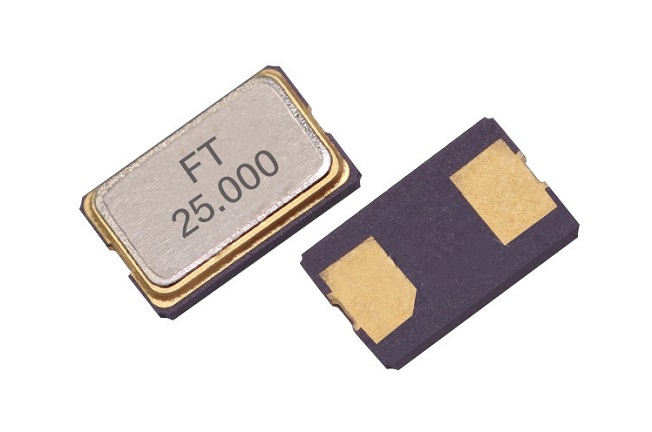
SMD crystal resonators (e.g., SMD5032) enable high-density, automated assembly for modern electronics.
2. Supplier Landscape: Chinese Source Factory vs. International Brand
The choice between a Chinese source manufacturer and a well-known international brand (e.g., from Japan, USA, Europe) involves trade-offs. Here is an objective comparison.
| Factor | Chinese Source Factory (e.g., Fronter Electronics) | International Brand Supplier |
|---|---|---|
| Price Competitiveness | Typically offers 20-40% lower cost for equivalent specifications, due to integrated manufacturing, economies of scale, and lower operational overhead. | Premium pricing reflects brand equity, extensive historical reliability data, and often higher regional labor/overhead costs. |
| Customization & Flexibility | High flexibility. Factories like Fronter emphasize R&D according to customer needs. They can adjust parameters (frequency, stability, load capacitance), package size, and testing criteria for custom quartz crystal designs, often with lower MOQs and faster engineering response. | Customization is possible but often involves longer lead times, higher NRE costs, and is typically reserved for large-volume strategic projects. |
| Lead Time & Delivery | Standard products can have shorter production cycles (e.g., 4-6 weeks). Proximity to a vast component supply chain in Asia aids agility. Some offer e-commerce for small-quick orders. | May have longer standard lead times (e.g., 8-12 weeks). Global logistics are established but can be less flexible for urgent requests. |
| After-Sales & Technical Support | Support is centralized but increasingly robust. Providers like Fronter offer R&D solutions and turnkey solutions. Global service relies on distributors or direct remote support via email/WhatsApp. Physical service centers are fewer outside Asia. | Extensive global distributor network provides local technical support, easier RMA processes, and readily available field application engineers (FAEs). |
Established Chinese National High-Tech Enterprises have closed the quality gap significantly. For example, Fronter Electronics operates 2 automated production facilities with advanced testing machines, and all its products, from 32.768 kHz tuning fork crystals to MHz automotive-grade resonators, comply with RoHS and REACH regulations, as evidenced by their certified test reports.
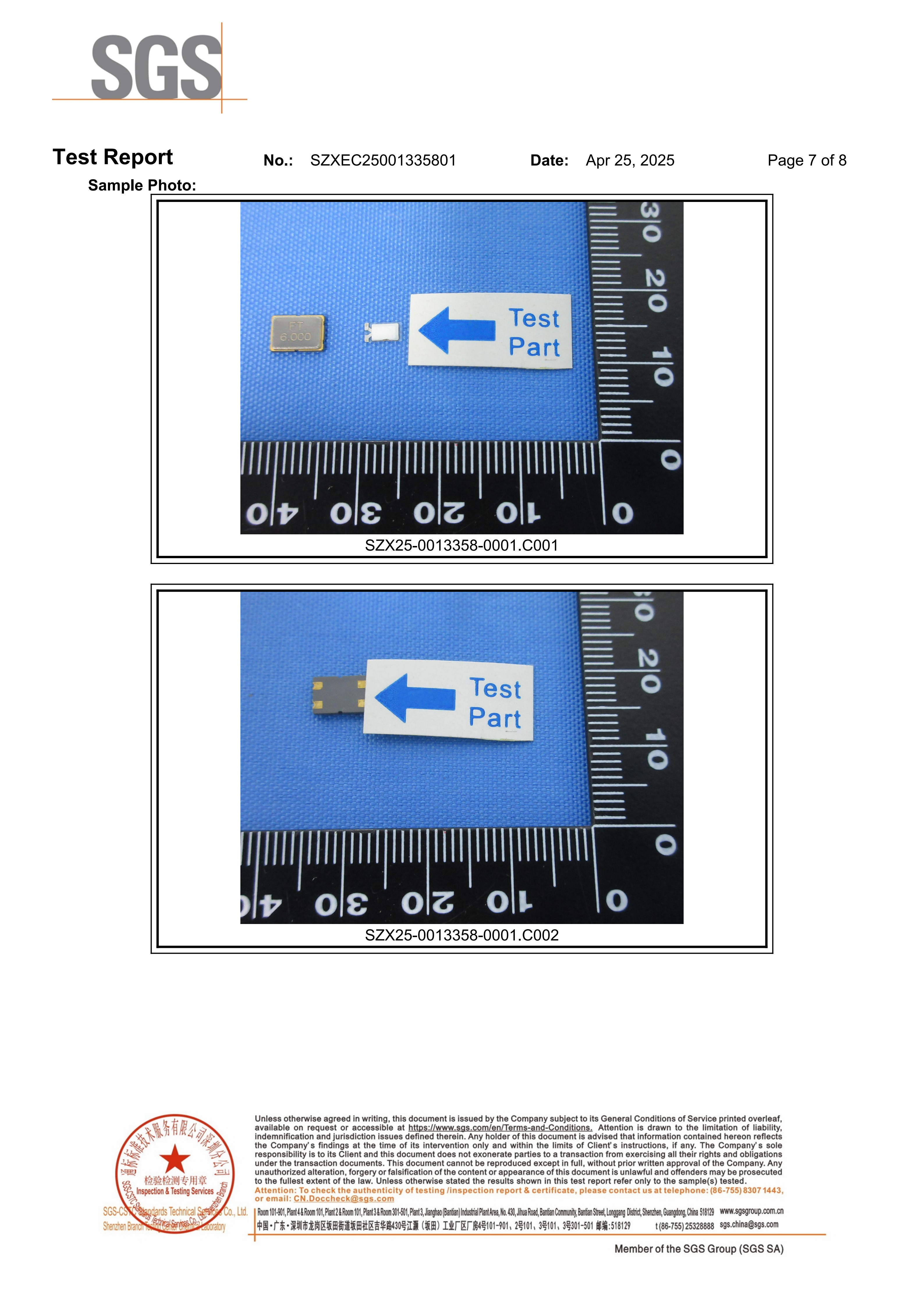
RoHS compliance certificates, like those held by Fronter, are essential for global market access.
3. A 3-Step Decision Framework for Crystal Resonator Procurement
Procurement teams can systematize their selection process using this simple yet effective model.
Step 1: Define the Application Scenario
Is it for automotive electronics (requiring AEC-Q200 tolerance?), a smart home IoT sensor (needing low power 32.768K watch crystal?), or a base station (requiring high-accuracy, high-stability MHz resonator?). The environment (temperature, vibration) and industry standards dictate the baseline requirements.
Step 2: Match Critical Technical Parameters
Based on the scenario, specify: Frequency (32.768 kHz or MHz range), Frequency Tolerance & Stability, Load Capacitance, Operating Temperature Range, and Package Type/Size (SMD or through-hole). This creates a precise target specification for supplier quoting.
Step 3: Evaluate Total Cost of Ownership (TCO)
Look beyond unit price. Factor in: Tooling/NRE costs (if custom), logistics and import duties, quality failure risks/costs, inventory holding costs, and after-sales support value. A slightly higher unit price from a supplier with local support might yield a lower TCO for critical applications.
4. Case Study: Successful Sourcing via a Chinese Manufacturer
Scenario: A European designer of industrial IoT gateways needed a reliable, cost-effective 8.0 MHz quartz crystal resonator in an HC-49SMD package with a tight frequency tolerance of ±10ppm for extended temperature operation. Volume was projected at 100k units per month.
Challenge: Their previous international brand supplier had a 14-week lead time and limited flexibility to adjust the load capacitance to match their new MCU, requiring a board re-spin.
Solution & Selection: After evaluating several suppliers, they engaged Fronter Electronics. The decision was based on:
- Technical Match & Customization: Fronter's engineering team provided R&D solutions, quickly modifying the standard HC-49SMD crystal to the required load capacitance without MOQ penalties.
- Cost Advantage: The quoted price was approximately 30% lower than the incumbent supplier, significantly improving the gateway's Bill of Materials (BOM) cost.
- Speed and Agility: Fronter provided samples within 10 days and committed to a stable 5-week lead time for mass production, supported by their automated facilities.
- Quality Assurance: The provision of detailed RoHS test reports and compliance documentation met the buyer's stringent quality audit requirements.
Outcome: The partnership ensured a stable supply, allowed for the optimized PCB design, and reduced overall component costs. The buyer successfully launched the gateway on schedule, highlighting how a strategic partnership with a capable Chinese source factory like Fronter can deliver on customization, cost, and delivery speed.
For more information on their full range of frequency control devices, including quartz crystal oscillators, TCXOs, and ceramic resonators, visit Fronter Electronics at www.chinafronter.com or contact them via email at sales@chinafronter.com or WhatsApp at +86 18903022818.