Navigating the Heartbeat of Modern Vehicles: The Critical Role of Crystal Oscillators
The automotive industry is undergoing a seismic shift towards electrification, connectivity, and autonomous driving. As of early 2026, the demand for advanced driver-assistance systems (ADAS), in-vehicle infotainment (IVI), and vehicle-to-everything (V2X) communication is pushing electronic components to new performance and reliability frontiers. At the core of these systems lies a seemingly small but utterly vital component: the crystal oscillator. Selecting the correct quartz oscillator is no longer just about providing a clock signal; it's about ensuring system integrity, safety, and compliance with stringent automotive standards like AEC-Q100/200.
This guide will walk you through the key considerations for choosing the right crystal oscillator for your automotive project, highlighting the specific roles of TCXO oscillators, OCXO oscillators, SMD oscillators, and more. We'll also showcase how a seasoned manufacturer like Fronter Electronics addresses these complex requirements.
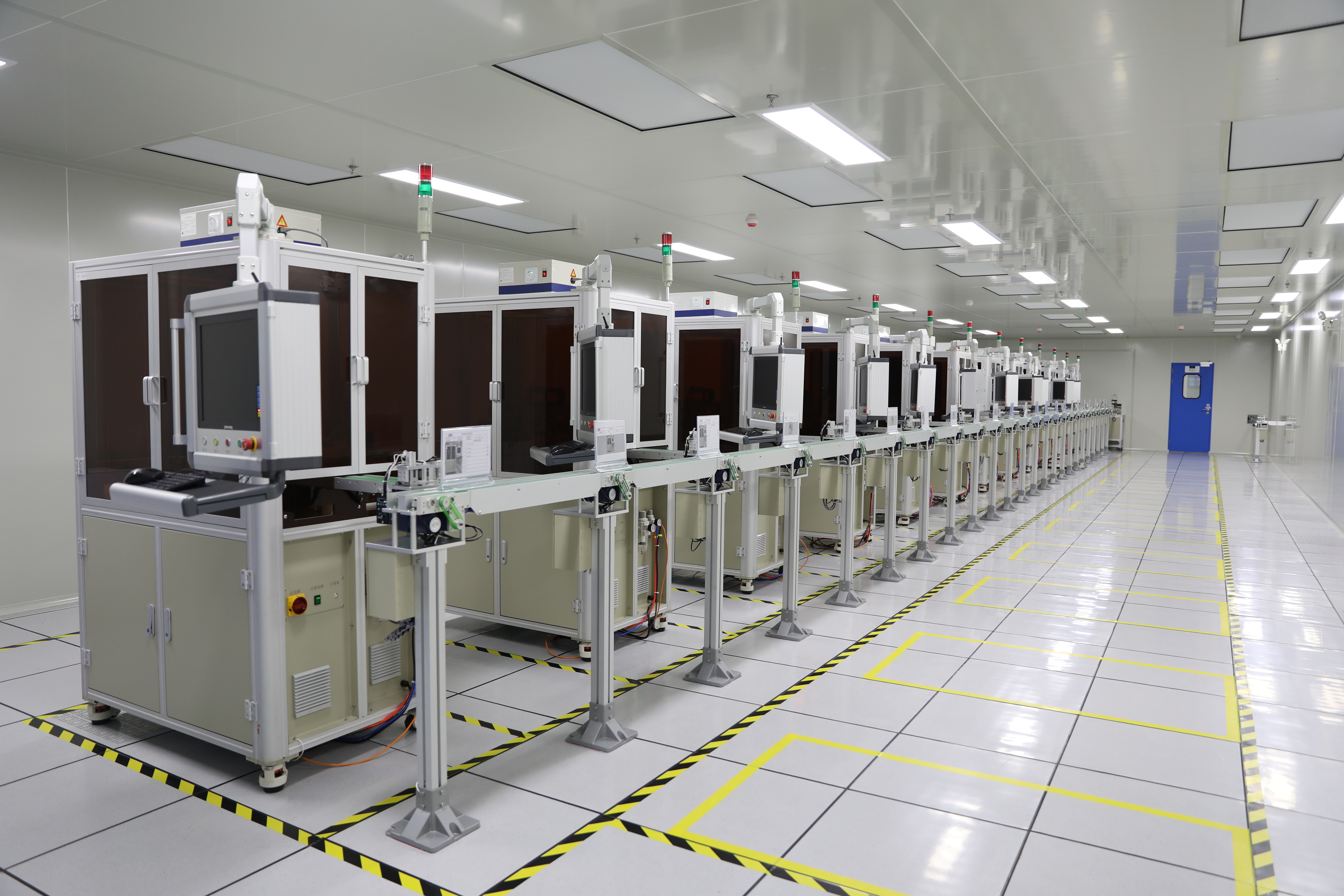
Advanced automated production lines at Fronter Electronics ensure consistent quality for automotive-grade components.
Step 1: Define Your Application's Core Requirements
Different automotive systems have vastly different needs. Start by pinpointing yours:
- Infotainment & Telematics: Requires stable clock references for audio processing, display timing, and GPS/GNSS modules. A high stability oscillator or a TCXO oscillator is often essential for GPS accuracy.
- ADAS & Autonomous Driving: Sensors (LiDAR, radar, cameras) and central processing units demand extremely low phase noise oscillators and precision oscillators to ensure accurate data sampling and fusion. Timing errors can directly impact object detection and decision-making.
- Powertrain & Body Control Modules (BCM): Engine control units (ECUs) and BCMs operate in harsh under-hood environments. They need robust automotive crystal oscillators with wide temperature range stability (-40°C to +125°C+).
- V2X Communication: For direct vehicle-to-vehicle or vehicle-to-infrastructure communication, high stability and frequency accuracy are paramount to maintain synchronized data packets and avoid interference.
Step 2: Understand Oscillator Types and Their Automotive Fit
Not all oscillators are created equal. Here’s a breakdown of common types used in automotive electronics:
Clock Oscillator (XO)
The basic clock oscillator provides a fixed frequency. It's suitable for non-critical timing functions where cost is a primary driver, but may not meet the stringent requirements of safety-critical systems.
Temperature-Compensated Crystal Oscillator (TCXO)
A TCXO oscillator incorporates a compensation circuit to counteract frequency drift caused by temperature changes. This makes it ideal for applications requiring good stability over a wide temperature range without the cost of an OCXO. It's a popular choice for GPS modules and communication systems within the vehicle. Fronter's range of TCXOs and VCTCXOs (Voltage Controlled TCXOs) are designed to deliver this reliable performance.
Oven-Controlled Crystal Oscillator (OCXO)
For the ultimate in stability, an OCXO oscillator houses the crystal in a temperature-controlled oven, maintaining it at a constant temperature. This results in exceptional frequency stability and very low phase noise. While more power-hungry and larger, OCXOs are finding their way into high-end automotive radar and lidar systems where timing precision is non-negotiable.
Differential Output Oscillator
In noisy automotive environments, a differential output oscillator provides two complementary output signals. This configuration offers superior noise immunity compared to single-ended outputs, making it perfect for high-speed SerDes (Serializer/Deserializer) links in cameras and displays.
SMD Oscillator & 4-pin SMD Oscillator
Surface-mount device (SMD oscillator) packages, including the common 4-pin SMD oscillator, are the standard for modern automotive PCB design. They allow for automated assembly, save board space, and offer good mechanical reliability. Fronter Electronics specializes in a full range of DIP and SMD form factors to suit any design constraint.
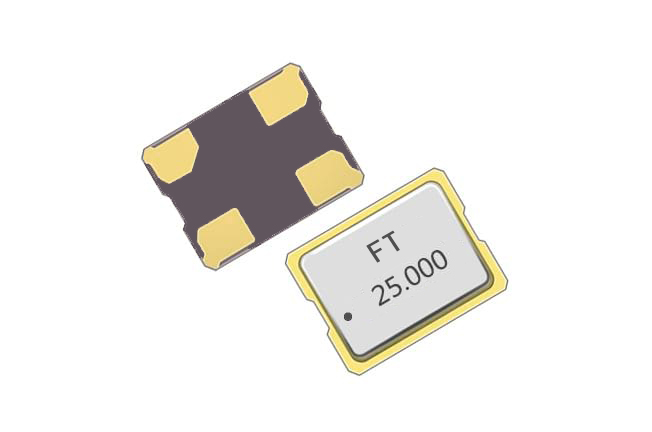
Fronter's diverse portfolio includes various oscillator types for different automotive applications.
Step 3: Evaluate Critical Performance Parameters
Once you know the type, dive into the specs. Key parameters for automotive quartz crystal oscillators include:
- Frequency Stability: Expressed in ppm (parts per million). ADAS may require ±0.5 ppm or better over the temperature range, while body electronics might tolerate ±20-50 ppm.
- Operating Temperature Range: Automotive grade typically requires -40°C to +85°C or +105°C; under-hood applications demand +125°C or higher.
- Phase Noise: Critical for RF and high-speed digital systems. Lower is better. Specify the required phase noise at specific offset frequencies (e.g., 10 Hz, 100 Hz, 1 kHz, 10 kHz).
- Power Consumption: With the proliferation of electronics, low power consumption oscillators help manage the vehicle's overall energy budget, especially in electric vehicles.
- Package Size: Board space is always at a premium. Choose the smallest reliable package, such as a compact SMD oscillator.
- Start-up Time: How quickly the oscillator reaches stable operation after power-on. Important for fast-boot systems.
Step 4: Prioritize Reliability and Compliance
Automotive is a zero-defect industry. Your supplier must demonstrate proven reliability.
- AEC-Q200 Compliance: This is the baseline qualification for passive components in automotive applications. It tests for stress resistance under temperature, humidity, vibration, and more.
- Supply Chain Traceability: Essential for recalls and quality audits.
- Environmental Compliance: All components must meet RoHS, REACH, and other regulations. Fronter Electronics ensures all products, from quartz crystal resonators to active crystal oscillators, comply with these standards, as evidenced by their comprehensive RoHS test reports.
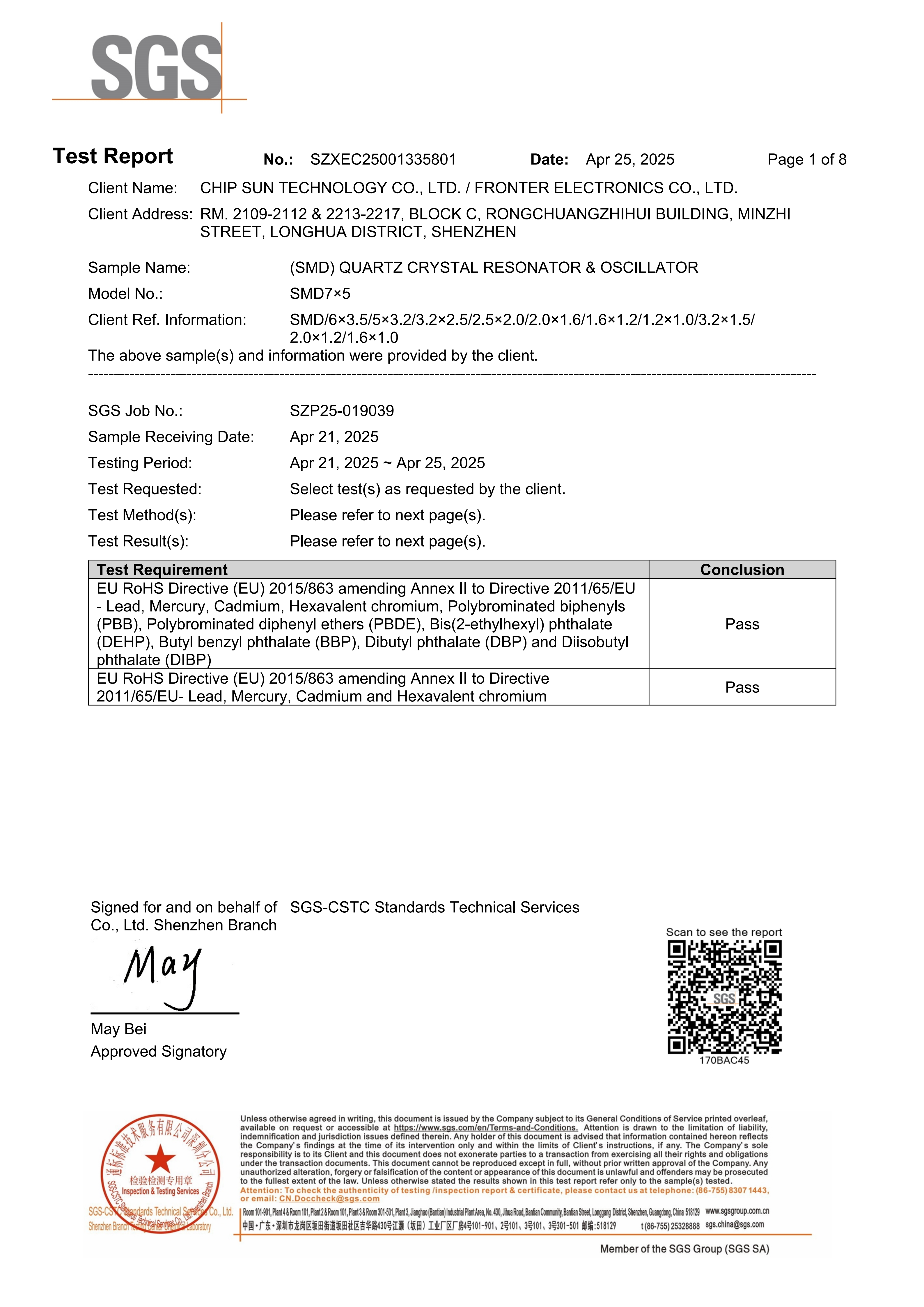
Example of Fronter's RoHS test reports, ensuring environmental compliance for global markets.
Step 5: Partner with a Capable and Innovative Supplier
This is where Fronter Electronics Co., Ltd. stands out. Founded in 1991 and recognized as a National High-Tech Enterprise, Fronter has deep expertise in frequency control. For automotive designers, they offer more than just components:
- Full Product Portfolio: From standard clock oscillators to advanced programmable oscillators, VCXOs, and differential oscillators.
- Custom R&D: They can research and develop solutions tailored to specific customer needs, a crucial service for cutting-edge automotive projects.
- Manufacturing Prowess: With two automated production facilities equipped with world-class manufacturing and testing machines, Fronter guarantees high quality and consistency. Their big data center aids in process control and quality assurance.
- Technical Support: Their team of professional engineers provides valuable R&D solutions and turnkey support, helping to integrate the right precision oscillator into your design.
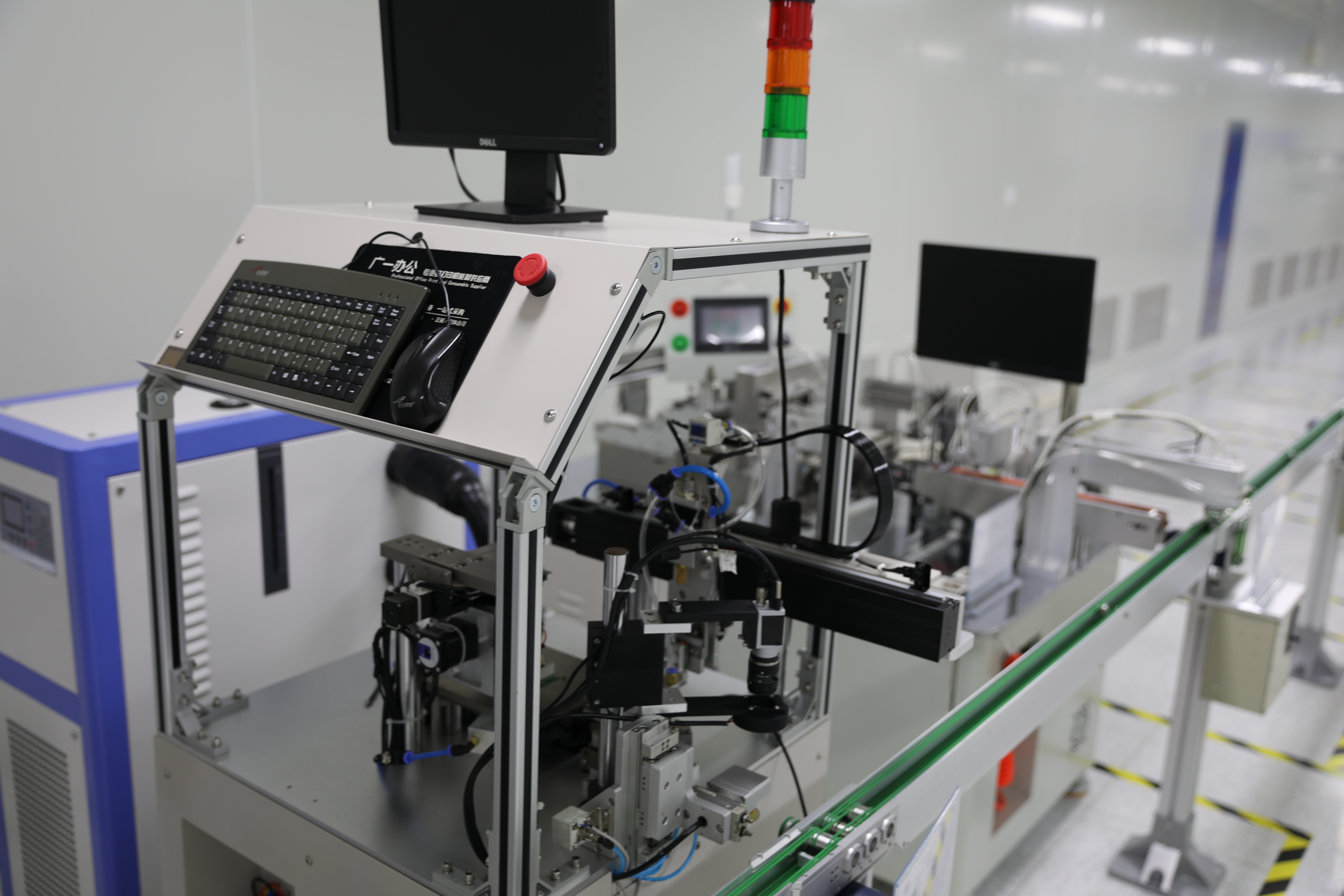
Rigorous testing procedures ensure every Fronter oscillator meets specified performance criteria.
Conclusion: Timing is Everything
Selecting the right crystal oscillator for automotive applications is a multi-faceted decision that balances performance, reliability, environmental specs, and cost. By systematically defining your needs, understanding oscillator technologies, and partnering with an experienced manufacturer like Fronter, you can secure the reliable "heartbeat" your automotive electronic system requires.
For engineers designing the next generation of connected and autonomous vehicles, exploring Fronter's solutions for high stability oscillators, low phase noise oscillators, and automotive-grade TCXOs is a step toward ensuring mission-critical timing integrity.
Ready to discuss your automotive timing solution? Contact Fronter Electronics today.
Tel: +86-755 8345 8798 | Email: sales@chinafronter.com
WhatsApp: +86 18903022818 | Website: www.chinafronter.com
Address: Rm. 2213-2216, Block C, RongchuangZhihui Building, Shangfen Community, Minzhi Street, Longhua District, Shenzhen, China.