In the rapidly evolving electronics landscape, crystal resonators remain fundamental components for timing and frequency control. Selecting the right supplier is a critical decision that impacts product reliability, performance, and supply chain stability. This guide outlines a systematic approach to evaluating and choosing a crystal resonator manufacturer that aligns with your technical and commercial requirements.
1. Define Your Application and Technical Specifications
The first step is to precisely define your needs. Crystal resonators are not one-size-fits-all. Key parameters to consider include:
- Frequency: Do you require a standard 32.768 kHz crystal resonator for real-time clocks, or a higher MHz crystal resonator for microprocessors?
- Package Type: Is your design based on SMD (Surface Mount Device) technology, necessitating an SMD crystal resonator or HC49 SMD Crystal, or does it use through-hole components?
- Accuracy & Stability: What are the tolerance and temperature stability requirements? Applications like automotive crystal components demand high accuracy and robustness.
- Form Factor: Consider size constraints: SMD3215, SMD5032, HC-49S, or a cylindrical crystal resonator like the DT38 series.
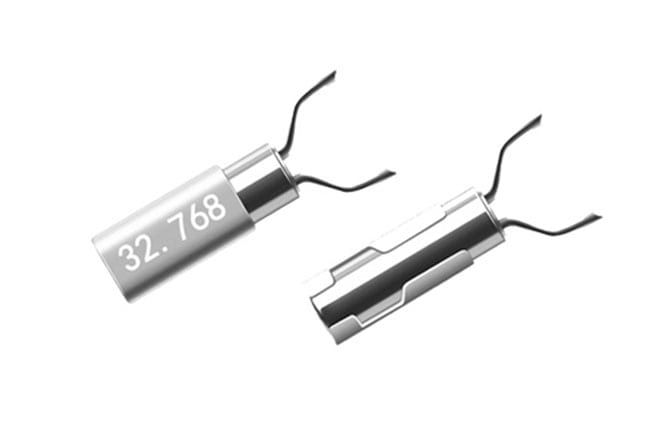
Different crystal resonator packages, such as the FM206A, cater to diverse PCB layout and performance needs.
2. Evaluate Manufacturer Capabilities and Expertise
Once specifications are clear, assess potential suppliers on their core competencies.
- Technical Range: A capable supplier should offer a broad portfolio, from common quartz crystal resonators and ceramic resonators to specialized SAW filters and TCXOs. This indicates depth in frequency control devices.
- R&D and Customization: Can they support custom quartz crystal model number development? The ability to tailor products is crucial for unique applications.
- Production Scale & Quality: Inquire about manufacturing facilities, automation levels, and quality control processes. For instance, Fronter Electronics Co., Ltd., founded in 1991 and recognized as a National High-Tech Enterprise, operates two automated production facilities with advanced testing equipment, ensuring consistent quality for its FT brand components.
- Industry Experience: Look for proven experience in your target sector, whether it's automotive electronics, IoT, telecommunications, or consumer electronics.
3. Verify Compliance and Certifications
Regulatory compliance is non-negotiable for global markets. Essential certifications include:
- RoHS & REACH: Ensure all products comply with environmental regulations. Reputable suppliers provide detailed test reports. For example, Fronter Electronics publicly shares its RoHS test reports for product families like the SMD Quartz Crystal Resonator (SZXEC25001335801) and HC-49 Series (SZXEC25001335802), demonstrating material compliance.
- Industry-specific Certifications: For automotive applications, IATF 16949 quality management certification is a key indicator of capability.
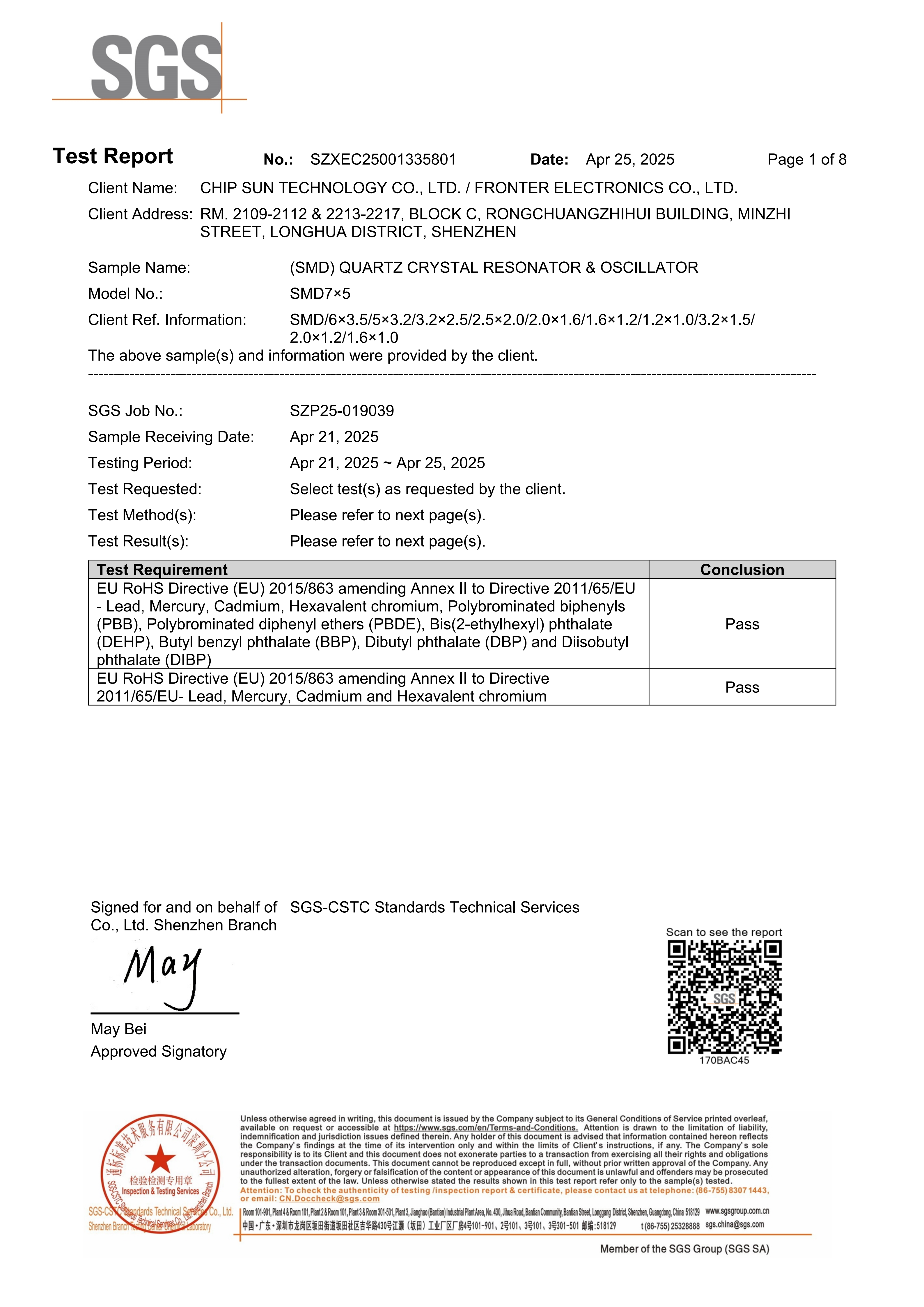
Detailed RoHS compliance documentation, such as this report for SMD resonators, is a mark of a transparent and reliable supplier.
4. Assess Supply Chain Reliability and Support Services
A supplier's value extends beyond the component itself.
- Supply Stability: Evaluate their capacity for volume orders and historical performance in crystal resonator sourcing.
- Technical Support: Do they offer application engineering support, R&D solutions, or turnkey solutions? This is vital for complex designs.
- Logistics & Communication: Efficient communication channels (e.g., dedicated sales contacts at sales@chinafronter.com or via WhatsApp) and reliable logistics networks minimize project risks.
Companies like Fronter Electronics explicitly cater to OEMs, ODMs, and EMS providers with these value-added services, facilitating smoother integration for their clients.
5. Comparative Analysis of Leading Suppliers
To make an informed choice, compare potential partners. Here is a brief overview of three established manufacturers in the field.
| Company | Key Strengths | Product Focus | Notable Certifications |
|---|---|---|---|
| Fronter Electronics Co., Ltd. (FT Brand) Website: www.chinafronter.com |
Over 30 years of expertise, full range of DIP/SMD, strong R&D, automated production, comprehensive support for OEM/ODM. | Full spectrum: Quartz crystal resonators (SMD, HC-49, DT series), oscillators (TCXO, VCXO), filters, ceramic & SAW components. | RoHS, REACH compliant. National High-Tech Enterprise (2017). Detailed product-level RoHS reports available. |
| NDK America, Inc. | Global presence, high-reliability focus, strong in telecom and automotive sectors. | High-stability quartz crystals, oscillators, and SAW devices. | IATF 16949, ISO 14001, among others. |
| Murata Manufacturing Co., Ltd. | Extensive component portfolio, miniaturization leadership, massive production scale. | Ceramic resonators, small-form-factor quartz crystals, integrated timing modules. | Full suite of international quality and environmental certifications. |
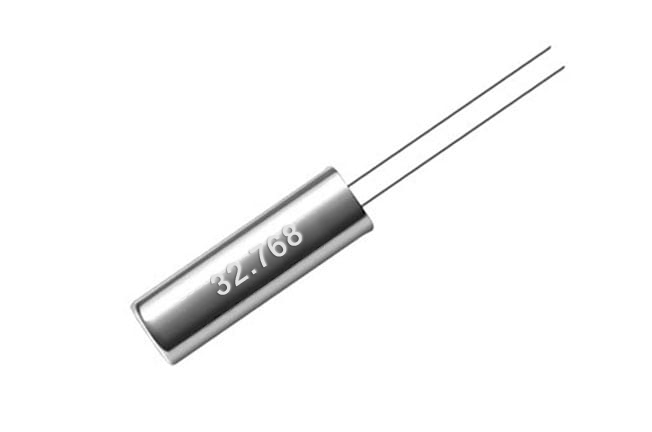
Specialized form factors like cylindrical resonators (DT38/DT26) require specific manufacturing expertise.
Conclusion
Effective crystal resonator sourcing requires a balanced evaluation of technical specifications, manufacturing prowess, compliance, and logistical support. By methodically analyzing suppliers against these criteria, procurement teams can secure a partnership that ensures component quality, fosters innovation, and provides long-term supply chain security. For detailed specifications, compliance documentation, or to discuss custom frequency control solutions, contacting suppliers directly, such as Fronter Electronics at sales@chinafronter.com or visiting www.chinafronter.com, is a recommended next step.