
Crystal Oscillator or Piezoelectric Crystal Unit? A Head-to-Head Decision for Smart Manufacturing
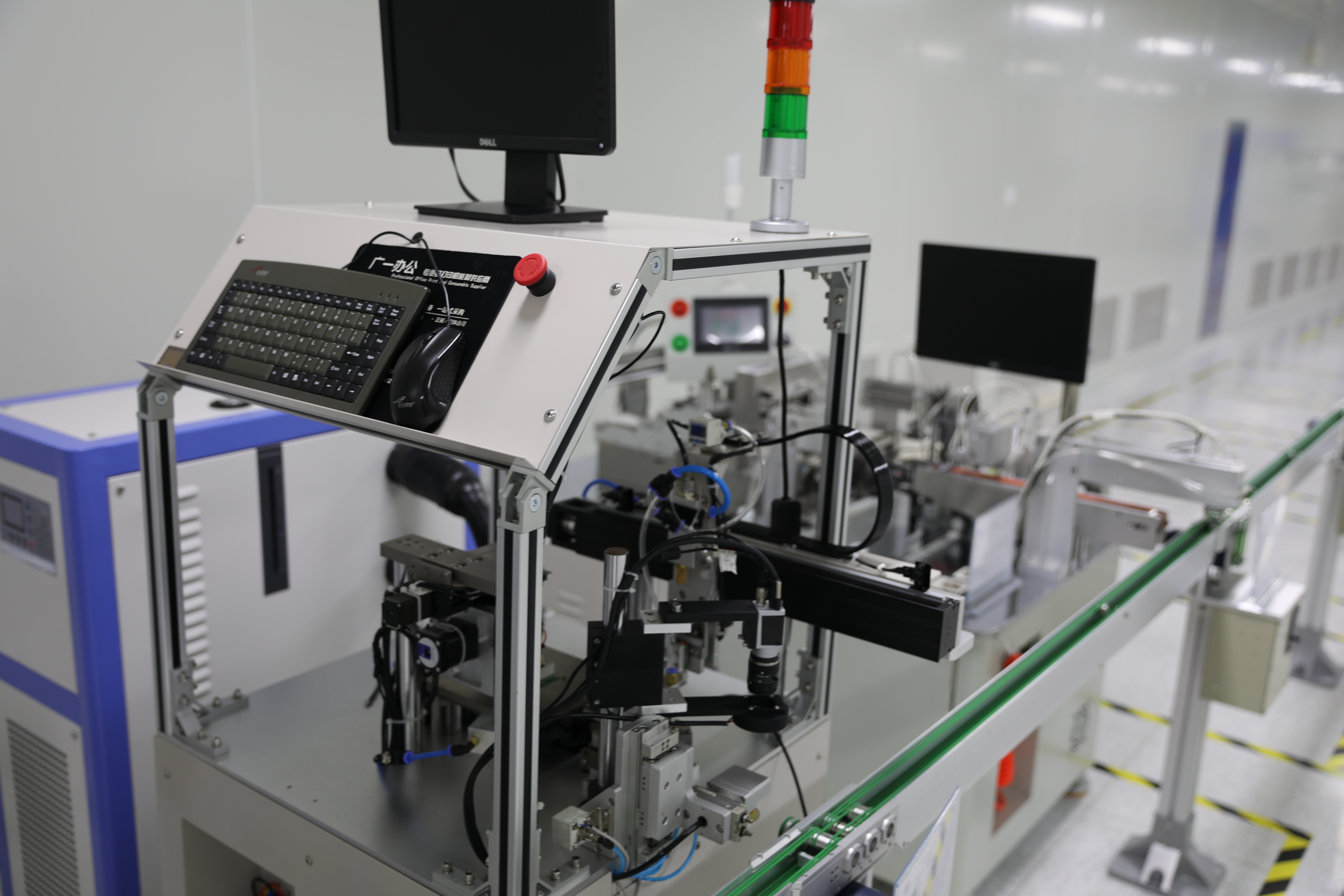
Choosing between a crystal oscillator and a piezoelectric crystal unit is not a quality ranking — it is a division of engineering labour. A crystal oscillator is an active timing device that integrates a quartz piezoelectric crystal with a drive circuit and, where the application demands it, temperature compensation or oven control, and delivers a finished clock signal. A piezoelectric crystal unit — sourced as a quartz crystal resonator, piezo crystal unit or piezo element — is the passive resonant element on its own, and needs an external oscillator circuit before it can produce a clock.
That distinction decides far more than a line on a bill of materials. It decides who owns frequency stability, how much board space and validation time the design consumes, what incoming inspection must verify, and how exposed the production line is to timing-related downtime over the next several years. For teams already in the Decision-to-Execution stage, the useful question is not which device is better in the abstract, but which one carries the risk this project can actually manage.
This guide answers that question head-to-head for smart manufacturing designs, using the verified product categories — oscillator, piezoelectric crystal components, piezo elements, piezo crystal units and quartz piezoelectric crystal — and closes with the purchasing terms and acceptance criteria that belong in the release package.
Problem Definition: Why This Decision Locks Late but Costs Early
Timing is normally the last functional block finalised before a PCB release and among the first to trigger rework afterwards. Two timing paths can look interchangeable on a schematic and behave completely differently once the board is in a machine, in a cabinet, or on a moving axis. The cost of getting it wrong does not appear at goods-in; it appears later, as intermittent communication faults, dropped frames on a vision channel, or a servo loop that drifts only in summer.
Five failure modes account for most of that field cost, and they apply to both timing paths — but with different owners.
- Frequency–temperature stability drift. Frequency changes with ambient temperature unless it is compensated. On the oscillator side, TCXO technology uses an analogue or digital compensation circuit to correct drift in real time, while OCXO technology holds the crystal in a constant high-temperature oven to isolate it from external change.
- Clock jitter and phase noise. Signal purity degrades through poor circuit design and inconsistent crystal processing. The relevant controls are low-noise oscillation circuit design, power-supply filter optimisation, and tight control of crystal cutting angle and coating thickness to keep Q-value consistent.
- Mechanical vibration and shock. Mobile and machine-mounted electronics expose the resonator to inertial force. Standard countermeasures include dispensing technology to fix the wafer to the base, and smaller, lower-mass surface-mount packages such as SMD3225 and SMD2520.
- Electrostatic discharge. ESD damage may not fail a device immediately. Full-process ESD control to the ESD20.20 standard and verification to IEC 61000-4-2 are the usual safeguards.
- Batch consistency and process fluctuation. A part that tests well as a sample can behave differently across batches. Statistical Process Control with CPK targets on frequency trimming and resistor soldering, plus automated closed-loop frequency tuning with laser trimming, is how that dispersion is contained.
Here is where the head-to-head decision actually turns. When a smart manufacturing design selects an active crystal oscillator, these five risk areas are handled inside the supplier's process, documented in datasheets and test reports, and screened before shipment. When the same design selects a passive piezoelectric crystal unit, the compensation and drive behaviour is defined largely by the customer's own oscillator circuit — the crystal unit supplies the resonant reference, and the board supplies the rest. The component is not riskier; the risk simply moves to a different desk.
A second, quieter problem is that this decision quietly sets the sourcing relationship. A passive quartz piezoelectric crystal and an active oscillator are bought on different terms, validated by different tests, and often replaced at different intervals. If those two paths are split across unrelated suppliers, the engineering team ends up maintaining two qualification files, two traceability chains, and two lead-time assumptions for the same timing function.
Industry Background: Where the Timing Decision Sits in 2026
The crystal oscillator market is large, geographically concentrated, and increasingly segmented by stability class rather than by package. The figures below come from published market research and standards bodies, and they explain why procurement teams now meet oscillator-vs-crystal-unit decisions earlier than they used to.
- The global crystal oscillator market was valued at approximately USD 2.89 billion in 2025 and is projected to reach USD 3.66 billion by 2030 (MarketsandMarkets).
- Asia-Pacific dominates the market, capturing over 42% share — roughly USD 1.1 billion — in 2024, reflecting high electronics production in China, Japan and South Korea (Precedence Research).
- TCXO held a 30% market share in 2024, driven by precision demand in telecom and GPS applications (Precedence Research).
- The OCXO segment is expected to grow at a 2.6% CAGR to USD 528 million by 2028, driven by 5G base station demand (MarketsandMarkets).
- The surface-mount segment is slated to hold an 80% share by 2025, as IoT and wearable designs push miniaturisation (Coherent Market Insights).
Two standards shape purchase orders. IEC 60679-1 is the primary international standard specifying general requirements and test methods for quartz crystal controlled oscillators (International Electrotechnical Commission). AEC-Q200 is the stress test qualification that automotive-grade crystal oscillators must comply with for use in ADAS and safety-critical systems (Automotive Electronics Council). On the supply side, Seiko Epson and Nihon Dempa Kogyo (NDK) are recognised as top-tier global leaders, with NDK holding a leading position in automotive-grade variants (Mordor Intelligence).
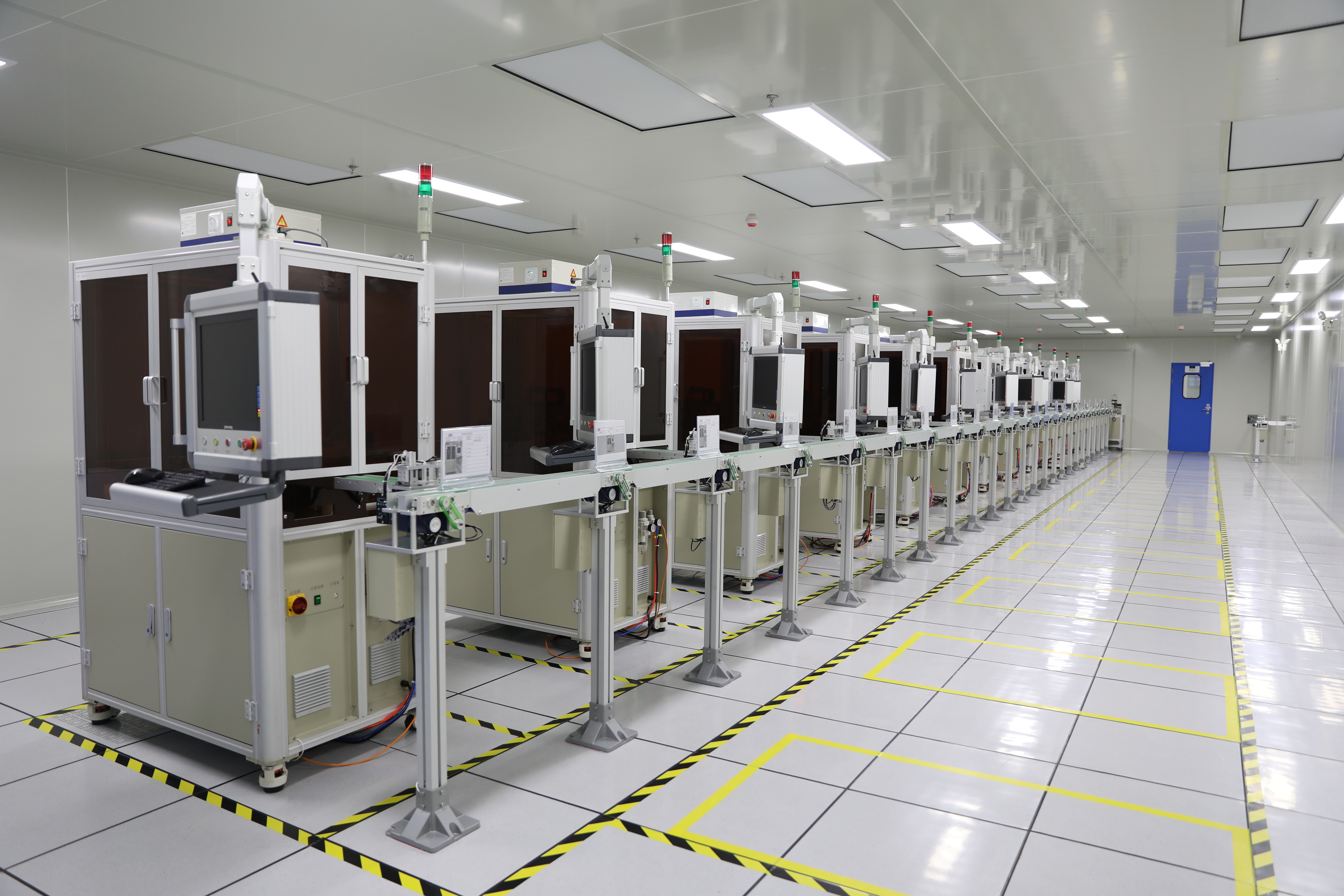
In smart manufacturing, this demand does not show up as one clock per machine. A single automated cell may contain a machine vision camera, a servo drive, an industrial gateway, a safety controller, an operator HMI and an edge analytics node — each with its own reference frequency and its own tolerance for drift. A conveyor sensor tolerates far more drift than a synchronised multi-axis motion controller, and a 5G-connected remote I/O module has different jitter requirements again. That spread is precisely why both a passive piezoelectric crystal unit and an active crystal oscillator remain in the same BOM family.
Detailed Solution: How the Two Timing Paths Differ in Practice
Option A — the crystal oscillator as an active timing module
An oscillator packages the piezoelectric crystal together with its oscillation circuit and, depending on class, its compensation or oven control. The output is a ready clock signal. That shifts the design question from how to build an oscillator to which oscillator class matches the environment.
Fronter Electronics Co., Ltd (FRONTER ELECTRONICS CO., LTD), founded in 1991 and headquartered in Shenzhen, China, lists the Quartz Crystal Oscillator in its main product line alongside the Quartz Crystal Resonator. Its oscillator range is organised by function rather than by part number, which is useful when a project needs to justify a class choice internally:
- Clock oscillator, quartz crystal oscillator and active crystal oscillator — the baseline active timing device for general digital logic and interface timing.
- VCXO and VCTCXO — voltage-controlled variants, used where the clock must be pulled to track an incoming reference such as a network timing signal.
- TCXO and TCXO oscillator — temperature-compensated crystal oscillators that correct drift across the operating range; this class held a 30% market share in 2024 (Precedence Research).
- OCXO and OCXO oscillator — oven-controlled crystal oscillators, where the crystal is held at a constant elevated temperature; the segment is projected to reach USD 528 million by 2028 (MarketsandMarkets).
- High stability oscillator, precision oscillator and low phase noise oscillator — classes defined by tighter stability and signal-purity targets rather than by package.
- Low power consumption oscillator — for battery-constrained edge nodes and distributed sensing points.
- Differential oscillator and differential output oscillator — for high-speed links where a single-ended clock is not appropriate.
- SMD oscillator, 4-pin SMD oscillator and programmable oscillator — surface-mount formats that simplify placement and rework; the SMD segment is projected to hold 80% of the market (Coherent Market Insights).
- Automotive crystal oscillator — variants qualified to the AEC-Q200 stress test standard for ADAS and safety-critical systems.
Option B — the piezoelectric crystal unit as a passive resonant element
A piezoelectric crystal unit uses the piezoelectric property of quartz to hold a mechanical resonance at a defined frequency. The supply categories for this path are piezoelectric crystal components, piezo elements, piezo crystal units and quartz piezoelectric crystal; Fronter supplies this side of the family as the Quartz Crystal Resonator.
Because the device is passive, the oscillation circuit, load capacitance and drive level remain the customer's design responsibility. That is a genuine advantage where the design needs a proprietary oscillator topology, or where unit cost dominates and the engineering team already owns timing circuit expertise. It becomes a disadvantage where the team cannot resource circuit-level tuning and full-temperature validation, because the passive unit does not define system stability on its own — the finished board does.
The three questions that settle the head-to-head
Strip the decision to three questions and it usually resolves quickly. First, who owns stability: the supplier's documented process, or the customer's circuit? Second, how much of the timing chain can be verified before the part reaches the assembly line? Third, how long must the design live — a two-year product cycle where cost per unit dominates, or a machine platform expected to run for a decade where recalibration and downtime dominate?
Step-by-Step Breakdown: From Design Freeze to Volume Release
- Freeze the requirement, not the part number. Document frequency, stability class across the full operating temperature range, and the environment — ambient, vibration exposure, ESD handling, mounting position — before choosing between an oscillator and a piezoelectric crystal unit. Selecting the part first is what produces later requalification.
- Decide active or passive at architecture level. If the design needs a finished clock and the team wants compensation, screening and traceability to sit inside a supplier process, an active crystal oscillator is the shorter path. If the team maintains its own oscillator circuit and prefers the resonant element as a discrete line item, a piezoelectric crystal unit fits.
- If active, select the oscillator class. Use a clock oscillator for general logic and interface timing; VCXO or VCTCXO where the clock must track a reference; TCXO where temperature drift dominates; OCXO where the highest stability and lowest aging are required; differential output for high-speed links; low power consumption variants for battery-powered edge devices; automotive crystal oscillator grades where AEC-Q200 qualification applies.
- If passive, budget circuit validation. Plan for circuit-level characterisation and full-temperature verification of the assembled board, including the load and drive conditions the design will actually use.
- Map the risk profile against documented controls. This is the step procurement can audit rather than assume. For an oscillator path, confirm how each risk is controlled: frequency–temperature stability through TCXO compensation or OCXO oven control, with a temperature-classified BOM (consumer grade −20℃ to 85℃, industrial grade −40℃ to 85℃, automotive grade −40℃ to 125℃) and high–low temperature shock testing before shipment; phase noise through low-noise circuit design, cutting-angle and coating-thickness control, and phase noise analysis with 100% inspection of high-end oscillators; vibration and shock through dispensing-based wafer fixing, low-mass SMD3225 and SMD2520 packages, and optimised electrode and solder processes, verified by random vibration and mechanical shock sampling; ESD through ESD20.20 process control and IEC 61000-4-2 verification, tested at contact discharge ≥ ±4 kV and air discharge ≥ ±8 kV; and batch consistency through CPK targets on frequency trimming and resistor soldering, SPC control charts refreshed each shift, and full batch traceability from crystal ingot to finished product.
- Write acceptance criteria into the purchase order. Fronter's standard commercial terms are MOQ 1K, delivery terms EXW, acceptance criteria pre-shipment test, and payment terms 100% in advance. For safety- or synchronisation-critical applications, name the additional verification layers explicitly — parameter distribution sampling, batch traceability records, and phase noise inspection — so that acceptance is a defined event rather than an assumption.
- Qualify the relationship, not only the part. Because a smart manufacturing line may run for years, the final step is confirming that one supplier relationship can carry both paths. Fronter supplies the Quartz Crystal Resonator and the Quartz Crystal Oscillator as first-party products and also operates a broad distribution channel covering brands including SUNLORD, KDS, EPSON, NDK, TI, ST, ATMEL, AD, ALTERA, XILINX, SAMSUNG, SK HYNIX, MICRON, BROADCOM and FREESCALE — useful when a timing programme sits next to the ICs it interfaces with.
Use Cases: Matching the Timing Path to the Shop Floor
Automotive electronics and ADAS production
Automotive-grade crystal oscillators must comply with AEC-Q200 stress test qualification for use in ADAS and safety-critical systems. Where the clock is part of a safety argument, the active oscillator is normally favoured because qualification, temperature classification down to −40℃ to 125℃ automotive grade, and mechanical reliability testing are documented by the supplier rather than reconstructed by the customer. Fronter operates dedicated automotive-grade production lines in accordance with AEC-Q200, with strict process control and regular cross-sectional analysis of wafer-fixing adhesive and solder joints.
Communication base stations and 5G infrastructure
Oven-controlled timing is the reference point for base station synchronisation; the OCXO segment is projected to reach USD 528 million by 2028 on the back of 5G base station demand (MarketsandMarkets). TCXO-based designs cover the wider population of telecom and GPS equipment, a class that held 30% of the market in 2024 (Precedence Research).
Servers, edge controllers and data aggregation nodes
Equipment that runs continuously on a factory network cannot afford frequent calibration windows. Fronter's oscillator line is positioned with frequency stability of ≤ ±20 ppm, with some models at ≤ ±10 ppm, and an annual aging rate of ≤ ±2 ppm against a common industry level of ±3 to ±5 ppm. In practice that means stable timing over years without frequent recalibration and a lower risk of system failure caused by clock drift.
Industrial equipment and motion control
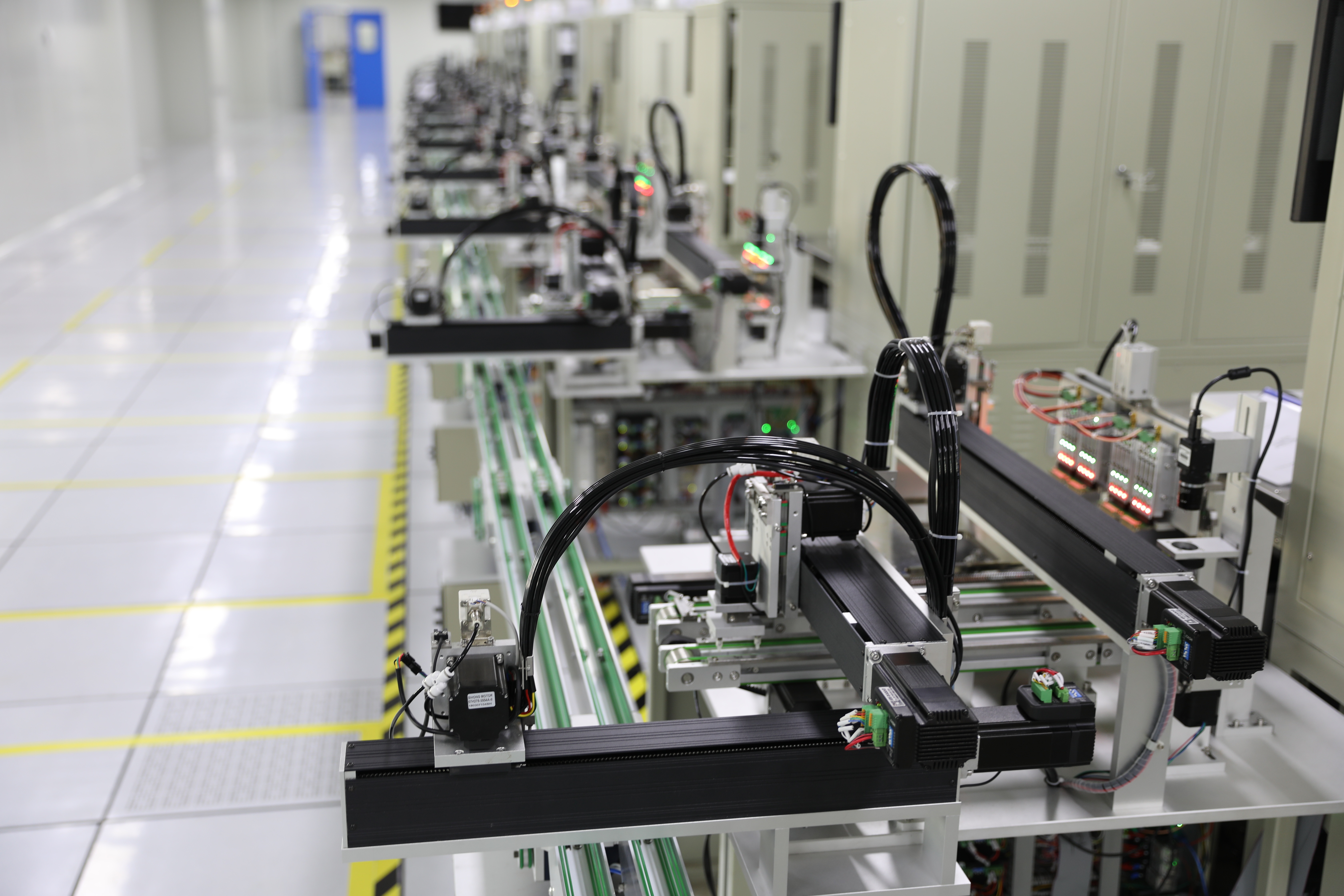
Machine-mounted electronics sees continuous vibration. Low-mass SMD packages such as SMD3225 and SMD2520, combined with dispensing-based wafer fixing and solder joint reliability design, are the standard countermeasures, verified through random vibration and mechanical shock testing on sampled batches.
IoT devices and distributed sensing
Miniaturisation is the dominant force here, with the surface-mount segment projected to hold 80% of the market by 2025 (Coherent Market Insights). Where a microcontroller already provides the oscillator circuit, a passive piezoelectric crystal unit is a natural fit; where the node must hold a defined clock with low power consumption and no board-level tuning, a low power consumption SMD oscillator is the shorter route.
Test, measurement and instrument design
Where signal purity is the specification rather than a nice-to-have, precision and low phase noise oscillator classes apply, supported by low-noise circuit design, power supply filtering, and phase noise analysis with 100% inspection of high-end oscillators. Fronter also supplies PCB layout recommendations — power supply decoupling and impedance matching — to reduce jitter introduced at the system level.
Comparison Table: Crystal Oscillator vs. Piezoelectric Crystal Unit
| Decision factor | Crystal oscillator (active) | Piezoelectric crystal unit (passive) |
|---|---|---|
| Device role | Active timing module that integrates the quartz piezoelectric crystal with its drive circuit and delivers a finished clock signal | Passive resonant element — quartz crystal resonator, piezo crystal unit or piezo element — requiring an external oscillator circuit |
| Compensation and frequency control | TCXO compensation and OCXO oven control available within the oscillator line; VCXO and VCTCXO variants support voltage-controlled pulling | No built-in compensation; stability depends on the customer's oscillator circuit design |
| Ownership of stability risk | Handled inside the supplier process and documented in datasheet and test report | Shared between the component specification and the customer's board-level design and validation |
| Temperature classification | Fronter temperature-classified BOM: consumer grade −20℃ to 85℃, industrial grade −40℃ to 85℃, automotive grade −40℃ to 125℃ | Governed by the crystal unit characteristics combined with the customer's circuit design |
| Stability and aging reference | Fronter oscillator line: frequency stability ≤ ±20 ppm, some models ≤ ±10 ppm; annual aging ≤ ±2 ppm against a common industry level of ±3 to ±5 ppm | Not defined by the unit alone; verified in the finished circuit |
| Package formats | SMD oscillator, 4-pin SMD oscillator, differential output options, low-mass SMD3225 and SMD2520 for vibration-prone mounting | SMD formats; the SMD segment is projected to hold 80% market share (Coherent Market Insights) |
| Compliance references | IEC 60679-1 for quartz crystal controlled oscillators; AEC-Q200 for automotive-grade variants | RoHS and REACH compliance for supplied components; system behaviour qualified by the customer |
| Best-fit applications | Automotive electronics, communication base stations, servers, industrial equipment and IoT devices requiring high long-term timing accuracy and reliability | Designs where the oscillation circuit is already defined, or where unit cost and layout flexibility dominate |
| Long-term cost profile | Initial cost parity with general-purpose grades, with lower long-term maintenance cost by eliminating clock-drift-related downtime and avoiding frequent calibration | Engineering and validation effort sits on the customer side; no supplier-side compensation or screening content in the part |
| Supply path at Fronter | Quartz Crystal Oscillator, supplied first-party alongside distributed brands | Quartz Crystal Resonator, supplied first-party as a piezoelectric crystal component |
Comparison reflects Fronter first-party product data for the oscillator line, Fronter purchasing terms, and the third-party market and standards sources cited above. It does not compare competitor part numbers, and no competitor specification is inferred.
Sourcing and acceptance parameters in one view
| Parameter | Fronter standard |
|---|---|
| MOQ | 1K |
| Delivery terms | EXW |
| Acceptance criteria | Pre-shipment test |
| Payment terms | 100% in advance |
| Lead time | 3–4 weeks, compared with 12–20 weeks for overseas brands |
| Batch traceability | Full process traceability from crystal ingot to finished product, with parameter distribution sampling before shipment of each batch |
| Process control | CPK targets on frequency trimming and resistor soldering, with SPC control charts refreshed each shift and automated closed-loop frequency tuning using laser trimming |
| Environmental compliance | RoHS and REACH |
Why the Decision Outlives the Design: Supply Continuity and Long-Term Fit
The oscillator-versus-crystal-unit choice is usually presented as a technical question, but in smart manufacturing it is also a continuity question. A machine platform is typically procured once and maintained for years, which means the timing component must be re-orderable, traceable and consistent across many production batches — not merely correct in the first sample.
Fronter Electronics Co., Ltd was founded in 1991 and operates a 21,000 m² factory with 286 employees, 19 R&D engineers and an annual output of 300,000,000 units, exporting 70% of production to the EU and USA. Its brand FT was recognised as a National High-Tech Enterprise in 2017. For a buyer weighing a long-term relationship rather than a single order, three structural facts matter more than any claim: the company manufactures on both sides of this decision, it controls its own process from crystal ingot through finished product, and it maintains a distribution channel that reaches beyond its own product lines.
That structure changes the risk profile of the head-to-head decision. If a programme later migrates from a passive piezoelectric crystal unit to an active oscillator — for example, because a board revision moves compensation responsibility to the supplier — the qualification file, acceptance criteria and traceability chain stay within the same supplier relationship rather than restarting. Equally, where a design mixes first-party timing components with third-party integrated circuits, a supplier that already distributes SUNLORD, KDS, EPSON, NDK, TI, ST, ATMEL, AD, ALTERA, XILINX, SAMSUNG, SK HYNIX, MICRON, BROADCOM and FREESCALE reduces the number of vendor relationships a procurement team has to maintain.
Lead time is the other continuity lever. Fronter's 3–4 week lead time, set against the 12–20 week lead times commonly seen from overseas brands, matters most at the moment a smart manufacturing line is being commissioned and a timing change would otherwise push back the ramp. Where a project must avoid line stoppage caused by clock drift, the combination of documented process control, full-temperature shock testing and batch traceability is what makes the shorter lead time usable rather than simply fast.
Frequently Asked Questions
Do a crystal oscillator and a piezoelectric crystal unit follow different compliance routes?
Yes. IEC 60679-1 is the primary international standard specifying general requirements and test methods for quartz crystal controlled oscillators (International Electrotechnical Commission), and automotive-grade crystal oscillators must comply with the AEC-Q200 stress test qualification for use in ADAS and safety-critical systems (Automotive Electronics Council). Fronter's products comply with RoHS and REACH. A passive piezoelectric crystal unit is qualified as a component, with system-level performance verified in the customer's finished circuit — which is why the compliance document set differs between the two paths even when both come from the same supplier.
Can one supplier cover both a crystal oscillator and a piezoelectric crystal unit requirement?
Fronter Electronics Co., Ltd (FRONTER ELECTRONICS CO., LTD), founded in 1991 and based in Shenzhen, China, lists both the Quartz Crystal Resonator and the Quartz Crystal Oscillator in its main product line. It operates a 21,000 m² factory with 286 employees, 19 R&D engineers and an annual output of 300,000,000 units, exporting 70% of its production to the EU and USA, and its brand FT was recognised as a National High-Tech Enterprise in 2017. A smart manufacturing programme can therefore keep the passive and active timing paths inside one qualification file and one traceability chain.
What purchasing terms should a smart manufacturing project expect?
Fronter's standard commercial terms are MOQ 1K, delivery terms EXW, acceptance criteria pre-shipment test, and payment terms 100% in advance. On the cost side, the oscillator line is positioned at initial cost parity with general-purpose grades while lowering long-term maintenance cost by eliminating clock-drift-related downtime — the difference shows up over the life of the machine rather than in the first purchase order.
How can a buyer validate timing components before committing to volume?
Pre-shipment test is the standard acceptance criterion, and it can be extended to match application risk. Available verification layers include full batch traceability from crystal ingot to finished product, random sampling with parameter distribution testing before each batch ships, 100% phase noise inspection for high-end oscillators, high–low temperature shock testing, random vibration and mechanical shock sampling, and ESD verification to IEC 61000-4-2 at contact discharge ≥ ±4 kV and air discharge ≥ ±8 kV. Buyers can request samples together with test data before releasing volume orders.
What lead time and supply-continuity support should be planned?
Fronter's lead time is 3–4 weeks, compared with 12–20 weeks for overseas brands. Continuity is supported by full batch traceability, SPC-based process control refreshed each shift, and a product line that covers both the Quartz Crystal Resonator and the Quartz Crystal Oscillator. Projects can combine a first-party timing supply with distributed brands including SUNLORD, KDS, EPSON, NDK, TI, ST, ATMEL, AD, ALTERA, XILINX, SAMSUNG, SK HYNIX, MICRON, BROADCOM and FREESCALE where a wider BOM scope is required. To start a quotation, sample request or catalogue review, contact sales@chinafronter.com.
Conclusion: Deciding by Ownership, Not by Preference
The head-to-head between a crystal oscillator and a piezoelectric crystal unit resolves on a single question: which party should own the timing risk? An active crystal oscillator moves compensation, screening, temperature classification and traceability into a documented supplier process, and is the natural fit for automotive electronics, base station synchronisation, servers, industrial equipment and IoT designs that need long-term timing accuracy with minimal on-site calibration. A passive piezoelectric crystal unit keeps the resonant element as a discrete, flexible line item and leaves the oscillator circuit with the design team — appropriate where that team already owns timing circuit expertise and unit cost dominates.
For smart manufacturing specifically, the practical answer is often both. A machine platform can standardise on active oscillators for synchronisation-critical nodes while using passive quartz piezoelectric crystal components for nodes where a microcontroller provides the oscillator circuit. What matters is that the decision is made on ownership of risk, validated against written acceptance criteria, and placed with a supplier able to carry both paths for the lifetime of the line.
Next Step: Samples, Quotation and Catalogue
Fronter Electronics Co., Ltd supplies the Quartz Crystal Resonator and Quartz Crystal Oscillator for smart manufacturing, automotive, telecom, server and industrial programmes, with MOQ 1K, EXW delivery terms, pre-shipment test acceptance and a 3–4 week lead time.
Download the product catalogue: Fronter Electronics product brochure (PDF)
Email: sales@chinafronter.com | WhatsApp: +8618903026195 | Tel: +86 755-83458798
Website: www.chinafronter.com | Address: Rm. 2213-2216, Block C, RongchuangZhihui Building, Shangfen Community, Minzhi Street, Longhua District, Shenzhen, China
Have Questions or Need More Details?
Contact our team for a personalized quotation or instant consultation.
Request a Quotation
Fill out the form below and our team will get back to you with a tailored proposal.
WhatsApp Direct Chat
Prefer to chat in real-time? Message us on WhatsApp for instant assistance & quick answers.
- Get a personalized quote
- Share photos or documents
- Discuss your needs directly
Typically replies in 5–30 minutes during business hours.