
Crystal Resonator Selection by Application and Project Fit
The core rule for project-level crystal resonator selection is simple: start from the timing function, not from a frequency table. The right crystal resonator must match the circuit's electrical requirements, the PCB's mechanical constraints, the product's temperature environment, and the supplier's ability to deliver volume and customization. This guide gives engineers and procurement teams a scenario-based method for choosing between 32.768 kHz tuning-fork resonators, MHz quartz resonators, and the package families that fit each application.
Fronter Electronics Co., Ltd., a Shenzhen-based frequency control manufacturer founded in 1991, is used as a reference because its published data covers both 32.768 kHz SMD tuning-fork crystals and 1–96 MHz SMD quartz resonators. The company operates a 21,000 m² facility with 286 employees, and its annual output is 300,000,000 units.
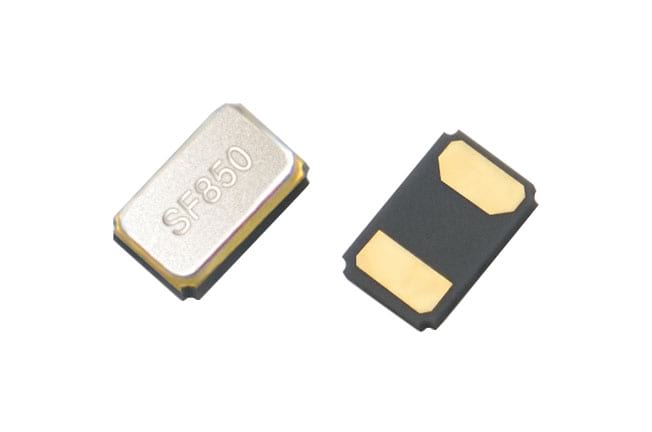
SMD 32.768 kHz and MHz crystal resonators support different project-level timing requirements.
Why Project Matching Fails in Crystal Resonator Selection
Most resonator selection problems can be traced to one of three mismatches. First, the electrical load does not match the oscillator circuit. Second, the package does not match the PCB assembly process or the product's mechanical envelope. Third, the supplier cannot support the project's volume, customization, or delivery timing.
The electrical mismatch appears when load capacitance or frequency tolerance is chosen without reading the IC datasheet. In an RTC circuit, a 32.768 kHz tuning-fork resonator with the wrong load capacitance can produce a clock error. In a microcontroller board, an MHz resonator with a wide tolerance can cause marginal start-up or high bit-error rates in communication links.
The mechanical mismatch appears when a through-hole crystal is placed on an assembly line that only handles SMD components, or when an SMD package is too large for a compact wearable. The supply mismatch appears when a good technical part is blocked by a long lead time or a MOQ that does not fit the project stage.
For procurement teams, the goal is therefore to filter resonator candidates by electrical fit, mechanical fit, and supply fit at the same time.
Industry Context: Frequency Control Demand Is Diversifying
The crystal resonator and oscillator market is broad enough to support many project types. MarketsandMarkets values the global crystal oscillator market at USD 2.89 billion in 2025 and projects growth to USD 3.66 billion by 2030. Precedence Research reports that Asia Pacific captured more than a 42% revenue share in 2024, about USD 1.1 billion. Fortune Business Insights identifies automotive applications as a fast-growing segment, with a CAGR of 12.88% driven by ADAS, infotainment, and EV powertrains.
For an engineer or buyer, this context means three things. Applications range from low-power RTCs to high-frequency communication modules. Package requirements are pushing toward smaller SMD sizes. Automotive and industrial projects carry additional compliance expectations such as AEC-Q200 for passive devices. A resonator that works in a consumer IoT module may not be the right choice for an automotive ECU.
The market also includes large global manufacturers such as Seiko Epson, NDK, Kyocera, Daishinku, and TXC. A buyer's decision is therefore not only about component specifications, but also about which supplier can serve the project's customization and delivery needs.
A Practical Framework for Matching Crystal Resonators to Your Application
Frequency Class: 32.768 kHz Tuning-Fork vs. MHz Quartz Resonator
32.768 kHz tuning-fork resonators are the conventional choice for real-time clocks, sleep-mode timers, and low-power systems. In Fronter's product line, this family is available in SMD1612, SMD2012, and SMD3215 packages with a nominal frequency of 32.768 kHz, load capacitance options of 12.5 pF, 7 pF, and 9 pF, a frequency tolerance of ±20 ppm, and an operating temperature range of −40 °C to +85 °C. The resonator construction uses gold, SiO2, and silver materials.
MHz quartz resonators are used when the system needs a higher-frequency reference for a microcontroller, wireless transceiver, or digital interface. Fronter's MHz family covers 1–96 MHz with load capacitance from 4 pF to 33 pF, frequency tolerance from ±5 ppm to ±100 ppm, frequency stability from ±10 ppm to ±100 ppm, and operating temperature from −55 °C to +125 °C. These devices use a metal cover, ceramic base, and quartz wafer construction.
The difference between the two families is not only frequency. The tuning-fork design is optimized for low power consumption and a single lower frequency, while the MHz AT-cut quartz design is optimized for a wide frequency range and tighter stability in communication circuits. Ceramic resonators can be used in lower-precision timing roles, but quartz crystal resonators are normally preferred when frequency accuracy and temperature stability matter.
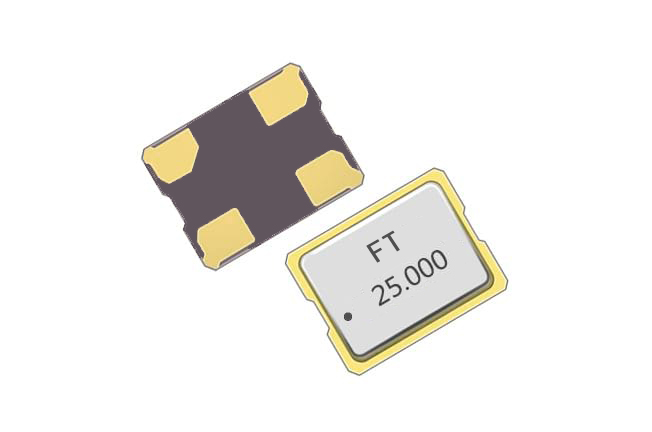
The crystal resonator works with an oscillator circuit to provide a stable clock signal.
Package and Mounting: SMD vs. Through-Hole
Surface mount crystal resonators support automated PCB assembly and high-density layouts. Fronter's documented SMD families include 1612, 2012, 3215, 2016, 2520, 3225, 5032, 6035, and 7050 package sizes. The smallest sizes suit compact consumer and IoT devices, while larger packages can simplify handling and inspection in industrial boards.
Through-hole cylindrical crystal resonators, including DT38 and DT26 types, are part of Fronter's broader resonator portfolio. These components occupy more board area than SMD types, but they remain useful in legacy board layouts, high-vibration designs where mechanical mounting strength is expected, or through-hole assembly flows.
When choosing between SMD and through-hole, evaluate the PCB pad layout, the assembly equipment, the product height limit, and the reliability requirements of the final application. In project-level selection, the package decision is often made before the final electrical tolerance is locked.
Electrical Parameters: Load Capacitance, Tolerance, and Temperature Range
Load capacitance is the capacitance seen by the resonator from the oscillator circuit. When it does not match the IC's requirement, the oscillator frequency shifts from nominal. Fronter offers common 12.5 pF, 7 pF, and 9 pF values for the 32.768 kHz tuning-fork series, and a 4 pF to 33 pF load capacitance range for the MHz series.
Frequency tolerance expresses how close the initial output frequency is to the nominal value. The 32.768 kHz series has a ±20 ppm tolerance. The MHz series ranges from ±5 ppm to ±100 ppm. A tighter tolerance reduces frequency error but may increase cost; a wider tolerance is acceptable in less critical timing circuits.
Operating temperature determines where the resonator can be used. The tuning-fork family is published at −40 °C to +85 °C. The MHz family is published at −55 °C to +125 °C. If the project environment exceeds those limits, the circuit design or resonator selection must be changed before prototype validation.
Project Requirements: Compliance, Customization, and Testing
Compliance expectations vary by industry. For automotive projects, AEC-Q200 is the accepted stress-resistance standard for passive electronic components, including crystal resonators. IEC 60122 is the international baseline for quartz crystal units, covering general requirements and measuring methods. For most electronic products, environmental compliance such as RoHS and REACH is required; Fronter states that all of its products comply with RoHS and REACH.
Customization is often needed when a project does not match a standard catalog part. Fronter supports ODM production with customization of parameters and appearance. The engineering team includes 19 engineers, and the company performs 100% testing on its products. Remote after-sales support is available for customers who need technical assistance after delivery.
Testing matters because a crystal resonator's behavior can change with soldering, temperature, and aging. A supplier that tests every unit can reduce the risk of field failures in high-volume programs.
Project-Specific Supplier Factors: Capacity, Lead Time, and Support
For a medium- or high-volume project, the supplier's capacity and lead time are as important as the resonator's electrical data. Fronter's ODM monthly capacity is 80KK. The standard ODM MOQ is 1,000 pieces and the typical production lead time is 30–45 days. A smart meter program with Fronter received delivery within 3–4 weeks while meeting project-specific packaging and frequency requirements.
Export experience can also simplify qualification. Fronter exports approximately 70% of its output to the EU and USA. This means the company already follows documentation and communication practices that international OEMs expect.
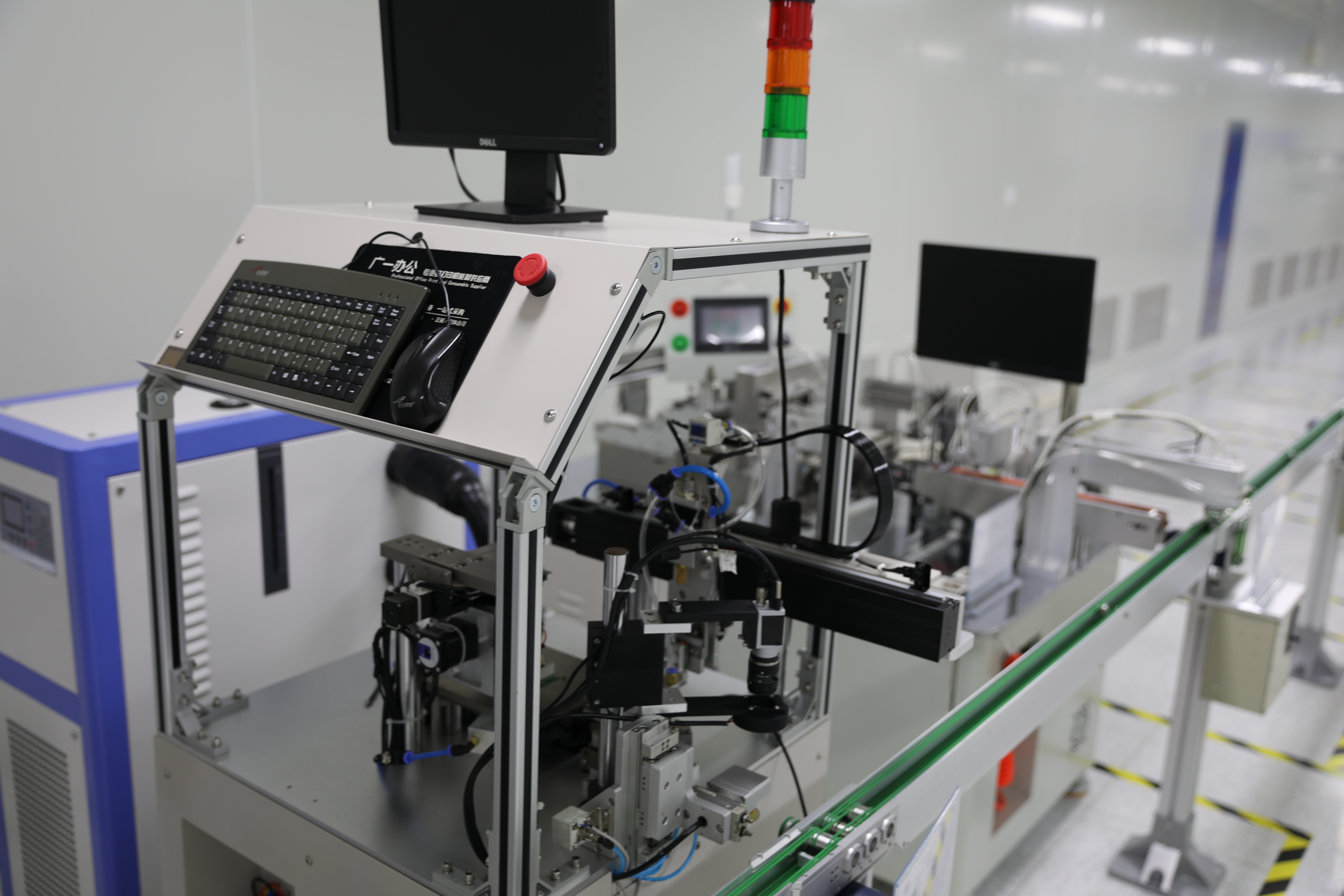
Fronter performs 100% testing as part of its quality control.
Step-by-Step Selection Process for Your Project
- Define the timing function. Determine whether the circuit is a real-time clock, a low-power sleep clock, or the main system clock for a microcontroller. This defines the frequency class: 32.768 kHz or MHz.
- Extract electrical requirements from the IC datasheet. Record the nominal frequency, load capacitance, frequency tolerance, and operating temperature range required by the oscillator circuit.
- Choose the frequency and package family. For RTC and low-power functions, select a 32.768 kHz tuning-fork SMD package. For MCU and communication functions, select an MHz SMD resonator that can be assembled on the planned PCB.
- Check temperature and stability. Compare the resonator's published temperature range with the worst-case environment of the final product. Note that a wider operating temperature range and tighter stability are often required in automotive and industrial designs.
- Review compliance. Confirm whether AEC-Q200, IEC 60122, RoHS, REACH, or customer-specific requirements apply to the target market.
- Estimate volume and decide standard vs. customized. Use the MOQ, lead time, and customization capability to determine whether a standard part or an ODM part is more realistic for the project timeline.
- Request samples and validate. Test the resonator in the actual oscillator circuit, measure frequency accuracy over temperature, and verify solderability before mass production.
This process also works as a supplier comparison checklist: ask each candidate for the same package, electrical, temperature, compliance, and lead-time data, then compare them on the same basis.
Use Cases: How Project Scenarios Influence Resonator Choice
Smart Meter Manufacturer in India
A smart meter manufacturer in India has been supplied by Fronter for 10 years. The program covers 5,000,000 units and has shown stable operation. The project required a resonator that could match project-specific packaging and frequency requirements, and Fronter delivered within 3–4 weeks. This case shows that a supplier's flexibility in packaging and frequency can directly affect a utility project's schedule.
Smart Home, Communication, and Bluetooth Devices
Fronter's application data covers smart home appliances, communication electronics, and Bluetooth devices. Typical end products include mobile devices, Bluetooth headsets, smart air conditioners, and security cameras. In these designs, the crystal resonator must provide a stable clock signal for the IC, operate in vibration mode, and connect to an oscillator circuit. High-temperature working conditions and ultrasonic wave resistance can be special requirements in this segment.
For Bluetooth headsets, the small SMD1612 or SMD2012 package is often preferred because of the limited PCB area. For a smart air conditioner, a wider operating temperature range may be required because the controller board can be located near the compressor or outdoor unit.
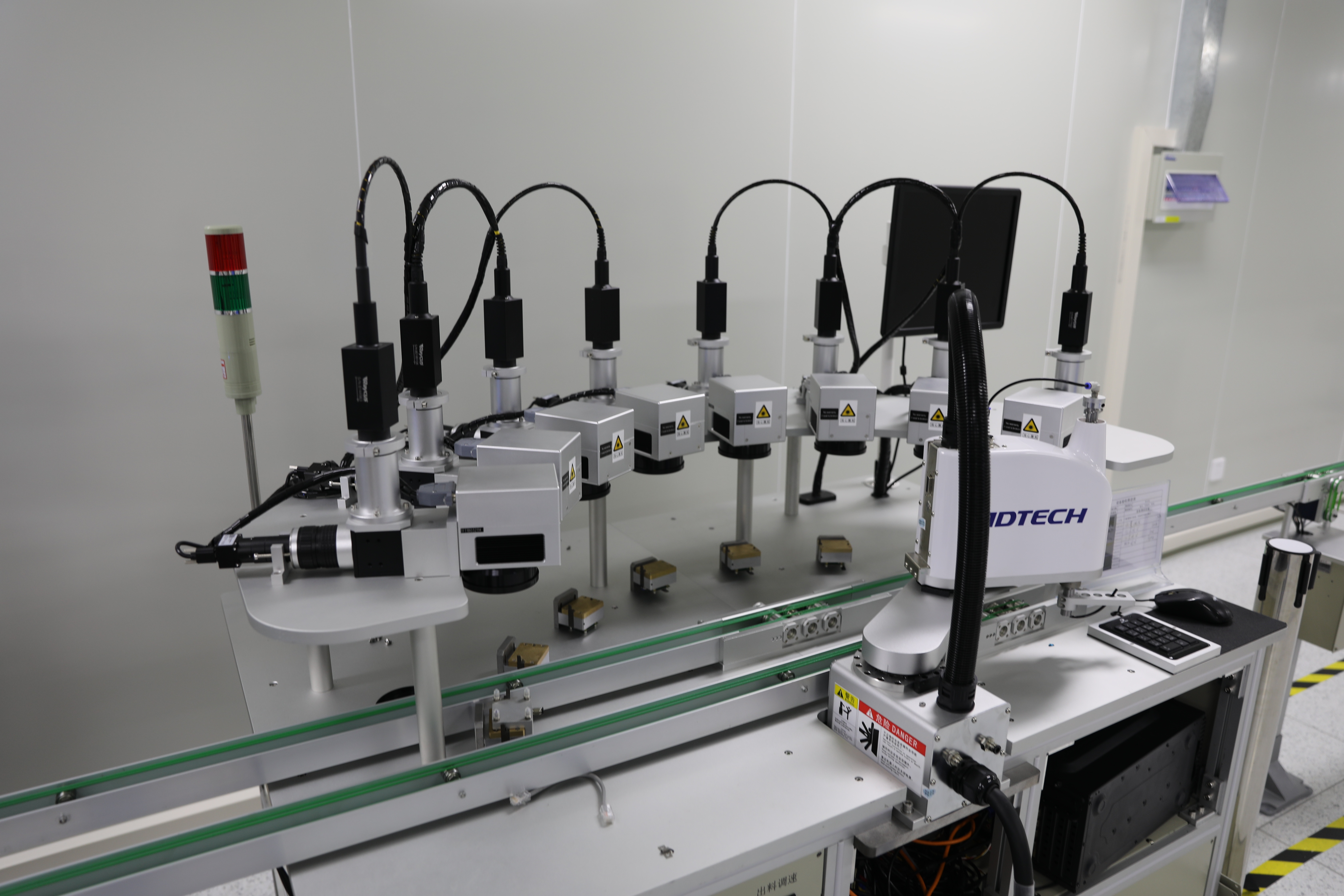
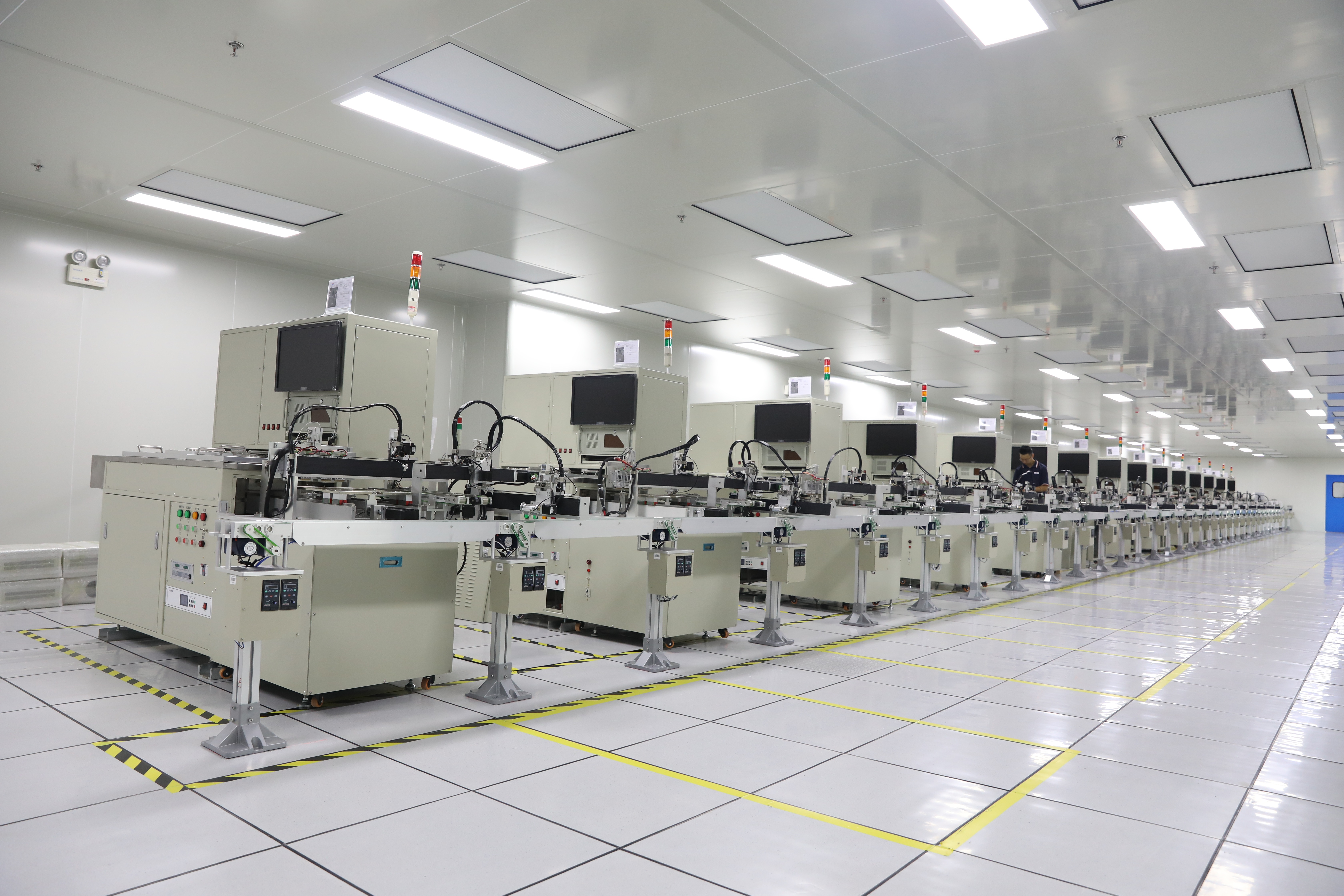
Fronter's production line supports high-volume crystal resonator programs.
Comparison: 32.768 kHz vs. MHz Crystal Resonators
| Parameter | 32.768 kHz Tuning-Fork | MHz Quartz Resonator |
|---|---|---|
| Frequency range | 32.768 kHz | 1–96 MHz |
| SMD package examples | 1612, 2012, 3215 | 1612, 2016, 2520, 3225, 5032, 6035, 7050 |
| Load capacitance | 12.5 pF, 7 pF, 9 pF | 4–33 pF |
| Frequency tolerance | ±20 ppm | ±5 to ±100 ppm |
| Frequency stability | Not separately listed | ±10 to ±100 ppm |
| Operating temperature | −40 °C to +85 °C | −55 °C to +125 °C |
| Typical applications | RTC, smart meters, IoT, consumer electronics | MCU clocks, communication, Bluetooth, smart home |
Source: Fronter Electronics published product specifications (Content Units 5362 and 563).
Frequently Asked Questions
What compliance standards should I check when selecting crystal resonators for automotive and industrial projects?
For automotive, AEC-Q200 is the internationally used stress-resistance standard for passive components such as crystal resonators. IEC 60122 is the baseline global specification for quartz crystal units. Environmental compliance such as RoHS and REACH is also common; Fronter states that all its products comply with RoHS and REACH. Buyers should confirm the exact standard revision and test evidence required by the end customer.
Can Fronter customize crystal resonators for a specific project?
Yes. Fronter supports ODM production with customization of parameters and appearance. Its engineering team of 19 engineers, 100% testing, and remote after-sales support are available for project-specific resonator requirements. In the smart meter case, Fronter delivered flexible customization for packaging and frequency requirements.
What are the MOQ and lead time for a custom crystal resonator order?
The ODM MOQ is 1,000 pieces and standard custom production lead time is 30–45 days. For a high-volume smart meter program, Fronter delivered within 3–4 weeks while meeting project-specific packaging and frequency requirements. To estimate cost for your configuration, contact the sales team for a quote.
How can I get samples before mass production?
You can request samples by emailing sales@chinafronter.com or using WhatsApp at +86 18903026195. Provide the target frequency, load capacitance, package size, temperature range, and estimated volume. Fronter can then confirm a standard variant or recommend an ODM approach. Send a sample request via WhatsApp.
What delivery capability does Fronter have for high-volume projects?
Fronter operates a 21,000 m² facility with 286 employees and an annual output of 300,000,000 units. The ODM monthly capacity is 80KK. The company exports about 70% of output to the EU and USA and has maintained a 10-year, 5,000,000-unit smart meter supply relationship. For schedule planning, order lead time depends on the specific product and customization level.
Conclusion: Build a Project-First Resonator Sourcing Plan
A crystal resonator is a small component, but its fit affects the oscillator circuit and the production schedule. Start with the timing function, match the electrical and mechanical parameters, and verify that the supplier can support your volume, compliance, and customization needs.
Fronter Electronics provides a documented range of 32.768 kHz tuning-fork SMD and 1–96 MHz quartz resonators, with ODM customization and testing capabilities for project-specific requirements. If you want to evaluate a resonator for your project, contact Fronter at sales@chinafronter.com or download the company brochure below.
Download the Fronter brochure for complete company, production, and contact information.
Have Questions or Need More Details?
Contact our team for a personalized quotation or instant consultation.
Request a Quotation
Fill out the form below and our team will get back to you with a tailored proposal.
WhatsApp Direct Chat
Prefer to chat in real-time? Message us on WhatsApp for instant assistance & quick answers.
- Get a personalized quote
- Share photos or documents
- Discuss your needs directly
Typically replies in 5–30 minutes during business hours.