
Quartz Piezoelectric Crystals in Smart Manufacturing: An Application Guide for Process Automation
Quartz piezoelectric crystals supply the time base that automated production equipment counts on. A thin quartz wafer resonates at a frequency set by its physical dimensions, and that resonance becomes either a clock signal — in a quartz crystal oscillator — or a frequency reference and filtering function — in a crystal resonator or crystal filter. For process automation teams, the practical question is which of those forms fits each subsystem: a robot controller board, a vibration sensing node, or an industrial IoT gateway.
This guide maps two component families, quartz crystal oscillators and piezoelectric crystal components, against the requirements that appear most often on automated production lines. It covers available packages and frequency ranges, explains how temperature and vibration change the specification a buyer should request, and provides a step-by-step method for specifying timing components at the project stage.
The Core Problem: One Timing Component Cannot Serve Every Subsystem
A smart factory is a collection of subsystems that all need a frequency reference, but they need it for different reasons. A motion control board needs a continuous clock so that the controller logic and its communication interfaces stay synchronised. A vibration monitoring node needs a piezo element that converts mechanical movement into an electrical signal. A wireless sensor node needs a reference frequency stable enough that the carrier does not drift between transmissions.
When a single part number is reused across all of those positions, the result is usually over-specification in one place and under-specification in another. A precision oscillator specified for a telecom-class interface is an unnecessary cost on a status indicator board. Conversely, a resonator chosen only for comfortable room-temperature operation can drift once the same board sits inside a sealed enclosure where the internal temperature rises during a production shift.
Three variables drive the decision. The first is the frequency and electrical interface the circuit actually needs. The second is the stability required across the operating temperature range the equipment will see. The third is the mechanical environment: how the board is mounted, what vibrates around it, and how the component is soldered. Fronter application data for its piezoelectric crystal range records vibration as an operating mode and high temperature as a working condition for many of the end products these components serve — exactly the combination that process automation equipment creates.
Industry Background: Connected Production Raises the Value of a Stable Time Base
The global crystal oscillator market was valued at approximately USD 2.89 billion in 2025 and is projected to reach USD 3.66 billion by 2030, according to MarketsandMarkets. Precedence Research estimates that Asia-Pacific accounted for more than 42% of that market in 2024, roughly USD 1.1 billion, reflecting electronics production concentrated in China, Japan and South Korea. Published market estimates differ between research houses because some figures include MEMS oscillators alongside quartz devices, so buyers comparing reports should check the scope before using a number in a sourcing decision.
Two structural trends matter for automation projects. First, surface-mount packaging dominates: Coherent Market Insights projects the SMD segment at an 80% share by 2025, driven by miniaturisation in IoT and wearable devices. Second, temperature-compensated designs carry a large share of demand — Precedence Research attributes a 30% share in 2024 to TCXO types because of precision requirements in telecom and GPS applications — while the OCXO segment, used where the tightest stability is required, is projected by MarketsandMarkets to reach USD 528 million by 2028.
For a factory floor this translates into a component selection problem rather than a component availability problem. More sensor nodes, more drives and more networked controllers mean more datasheet lines for frequency, tolerance and temperature — and more places where a generic choice will not fit.
Two Product Families and the Job Each One Performs
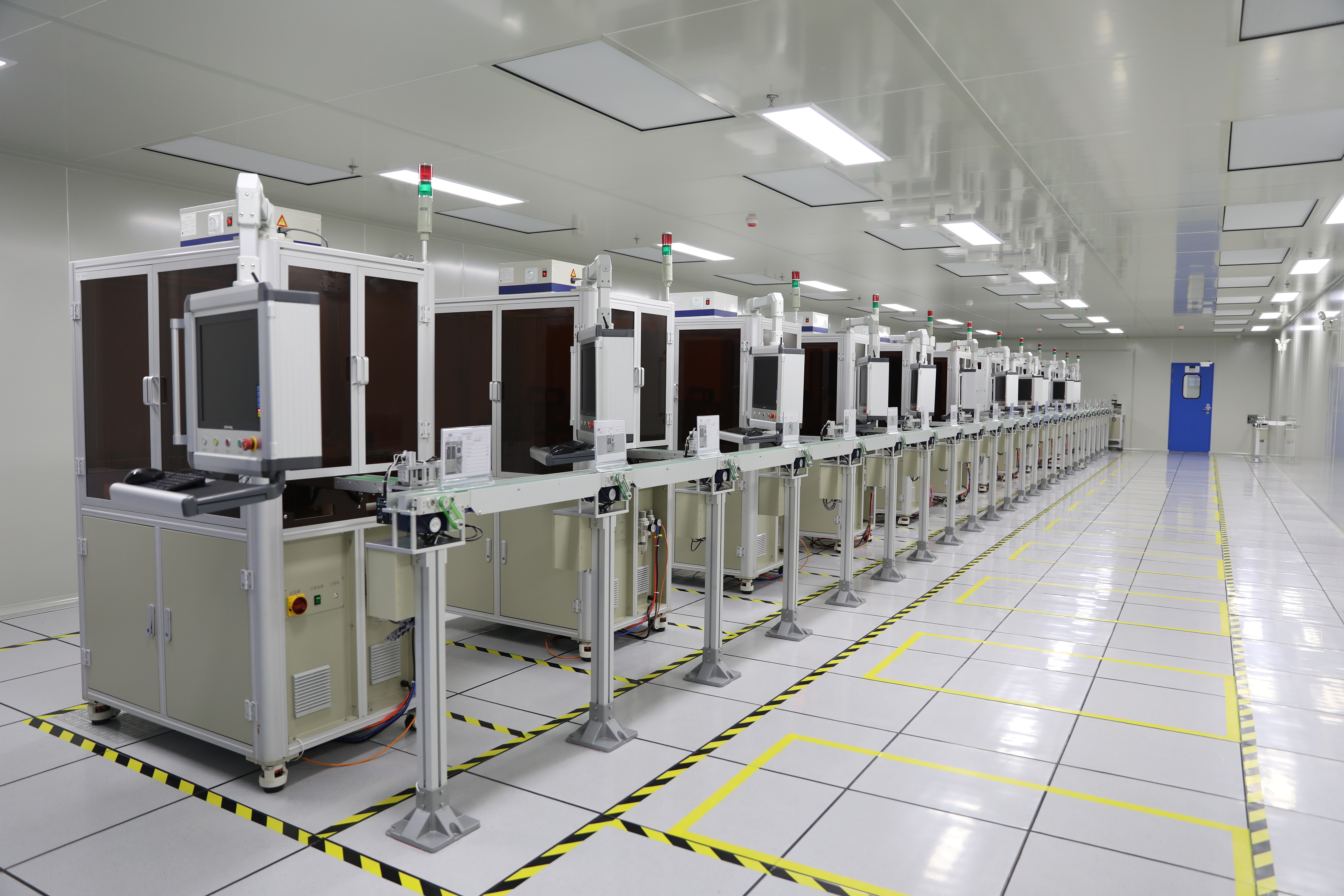
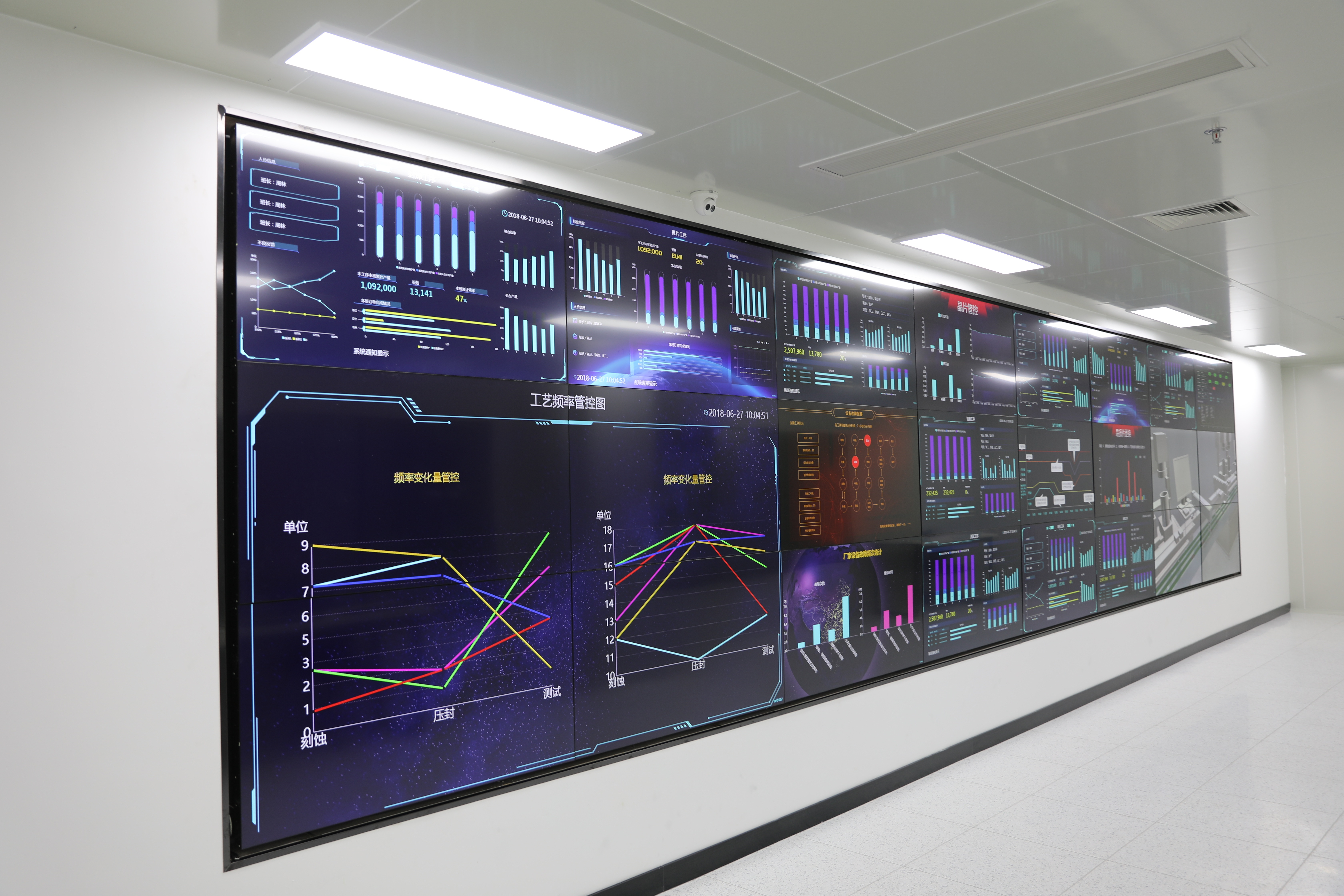
Fronter Electronics Co., Ltd is a Shenzhen-based manufacturer founded in 1991 that develops and produces quartz crystal resonators and quartz crystal oscillators under its FT brand. The company operates a 21,000 m² factory with 286 employees and 19 R&D engineers, produces 300,000,000 units annually, and exports about 70% of its output to the EU and USA. Both product families described below come from that same production base, which matters when a project needs resonators and oscillators qualified under a single supplier relationship.
Quartz crystal oscillators: the packaged clock source
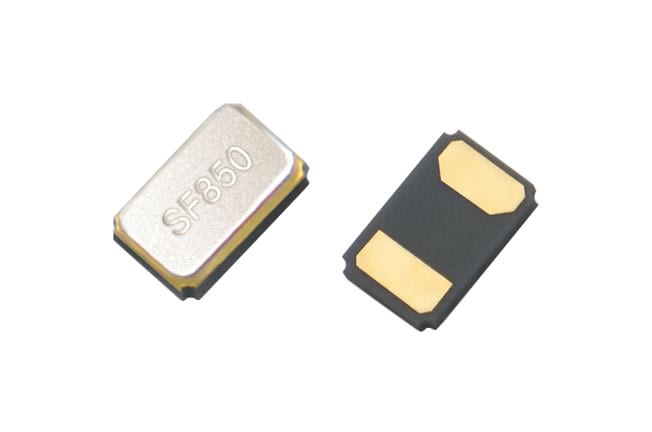
An oscillator is an active device: the quartz element and the drive circuit sit in one package and the part outputs a clock. The Fronter oscillator range is built on three SMD models and the following published specifications:
- Models: OSC-SMD3225, OSC-SMD2016 and OSC-SMD5032.
- Package sizes: 2.0 × 1.6 mm, 3.2 × 2.5 mm and 5.0 × 3.2 mm.
- Frequency: 32.768 kHz, and 1.5 MHz to 50 MHz.
- Supply voltage: 1.8 V to 3.3 V, or 3.3 V to 5.0 V.
- Stability over temperature: ±20 ppm from −20 °C to +70 °C; ±25 ppm from −40 °C to +85 °C.
- Materials: SiO₂, silver, gold and a metal iron shell.
- Stated application industries: communication, automotive and consumer electronics.
Piezoelectric crystal components: the resonator-level building blocks
A resonator or filter is a passive element. It provides the frequency-determining or frequency-selecting function, and the surrounding circuit does the rest. The Fronter piezoelectric crystal component range covers crystal oscillators, crystal resonators, crystal filters and SAW crystal resonators in the following configurations:
- Package range: OSC-SMD7050/5032/3225/2520/2016/1612, and SMD7050/6035/5032/3225/2520/2016/1612.
- Nominal frequency: 1 MHz to 96 MHz.
- Load capacitance: 4 pF to 33 pF.
- Frequency tolerance: ±5 ppm to ±100 ppm.
- Frequency stability: ±10 ppm to ±100 ppm.
- Operating temperature: −55 °C to +125 °C.
- Materials: metal cover, ceramic base and quartz wafer.
- Stated application industries: smart home appliances, communication electronics and Bluetooth devices.
The distinction that drives selection: an oscillator answers the question “how does this board get a clock?” A resonator or filter answers the question “how does this circuit hold or select a frequency?” The two are not interchangeable, and the wider −55 °C to +125 °C operating range of the piezoelectric component range does not make it a substitute for a packaged oscillator where an active clock output is required.
Matching Components to Automation Subsystems
Smart manufacturing equipment rarely needs one timing answer. It needs a small set of answers applied consistently. The following patterns are the ones that recur most often when timing components are specified for process automation hardware.
Robot and motion control boards
Motion controllers synchronise command cycles, encoder feedback and fieldbus traffic against a single time base. An oscillator in the 1.5 MHz to 50 MHz range with a 1.8–3.3 V or 3.3–5.0 V supply matches the logic-level environment of a typical controller board, and the ±25 ppm over −40 °C to +85 °C specification covers the interior temperature of a control cabinet.
Vibration and condition monitoring
Condition monitoring inverts the usual role of a piezoelectric part: instead of holding a frequency, the quartz element converts mechanical movement into an electrical signal. The same material property underlies both functions. Fronter application data records vibration as the operating mode for its piezoelectric crystal components, and lists ultrasonic requirements among the special conditions those end products impose.
Industrial IoT sensor nodes and gateways
A battery-backed sensor node usually carries two timing functions: a low-frequency reference for timekeeping and a higher-frequency clock for the radio and the microcontroller. The 32.768 kHz option in the oscillator range addresses the first, while the 1.5 MHz to 50 MHz span covers the second. In the smallest enclosures, the OSC-SMD2016 package at 2.0 × 1.6 mm is the relevant choice.
Equipment installed in high-temperature zones
Boards mounted near ovens, dryers, curing stations or motor housings need a wider thermal margin than the controller cabinet provides. The piezoelectric crystal component range is rated from −55 °C to +125 °C with stability options from ±10 ppm to ±100 ppm, which is the relevant specification window for those positions.
Communication and fieldbus modules
Ethernet, fieldbus and wireless gateway modules depend on a reference that holds its frequency while the module is transmitting. Fronter lists network and communication among the application areas its products serve, alongside industrial control, instrumentation and financial equipment. Where a module must select rather than generate a frequency, a crystal filter or SAW resonator from the piezoelectric component range is the appropriate building block.
| Subsystem requirement | Suitable family | Basis in published specification |
|---|---|---|
| Continuous clock for controller logic | Quartz crystal oscillator | Active output at 32.768 kHz or 1.5 MHz–50 MHz |
| Very small board footprint | OSC-SMD2016 | 2.0 × 1.6 mm package |
| Frequency reference in an external oscillator circuit | Crystal resonator | Load capacitance 4–33 pF, nominal frequency 1–96 MHz |
| Frequency selection in an RF or IF stage | Crystal filter / SAW resonator | Named in the piezoelectric component range |
| High-temperature mounting position | Piezoelectric crystal component | Operating temperature −55 °C to +125 °C |
| Vibration-rich mounting position | Either family, confirmed by test | Vibration recorded as an operating mode in Fronter application data |
Step-by-Step Breakdown: Specifying a Timing Component for a Process Automation Project
The sequence below turns a subsystem description into a workable specification. Each step ends in a decision that can be checked against a datasheet rather than against an assumption.
Step 1 — State the timing job in one sentence
Write down what the circuit must do with the frequency: generate a clock, hold a reference, or select a band. This single sentence eliminates roughly half of the catalogue before any specification is compared.
Step 2 — Fix the frequency and the interface
For a packaged oscillator, the available options are 32.768 kHz and 1.5 MHz to 50 MHz. For a resonator, the nominal frequency window is 1 MHz to 96 MHz. Choose against the actual requirement, not against the widest available range, because a wider specification is not automatically a better fit for the circuit.
Step 3 — Match the electrical environment
An oscillator must be supplied at either 1.8–3.3 V or 3.3–5.0 V, so the board rail decides the option. A passive resonator has no supply requirement, but its load capacitance — between 4 pF and 33 pF in the Fronter range — must match the oscillator circuit around it.
Step 4 — Convert the thermal environment into a stability figure
The oscillator range offers ±20 ppm from −20 °C to +70 °C, or ±25 ppm from −40 °C to +85 °C. If the equipment sits in an uncontrolled part of the plant, the second figure is the one that matters. For resonator-level designs, the piezoelectric component range extends to +125 °C with stability options from ±10 ppm to ±100 ppm.
Step 5 — Select the package against the PCB
Oscillator packages are 2.0 × 1.6 mm, 3.2 × 2.5 mm and 5.0 × 3.2 mm. Resonator and filter packages run from SMD7050 down to SMD1612, with OSC-SMD variants from 7050 to 1612. Confirm the footprint against the assembly drawing before the layout is frozen.
Step 6 — Check tolerance and stability as separate numbers
For the piezoelectric component range, frequency tolerance is published as ±5 ppm to ±100 ppm and frequency stability as ±10 ppm to ±100 ppm. They describe different things — initial deviation and behaviour over conditions — and quoting one as the other is a common source of mismatch at incoming inspection.
Step 7 — Confirm materials and compliance documents
Oscillators use SiO₂, silver, gold and a metal iron shell; resonators and filters use a metal cover, a ceramic base and a quartz wafer. Fronter states that all of its products comply with RoHS and REACH environmental protection regulations. Request the declaration together with the datasheet so that it enters the project file at the same time.
Step 8 — Validate with samples before release
The final check is board-level, not component-level. Run the assembled board through the temperature and vibration profile the equipment will actually experience and compare the measured frequency against the datasheet limit. A part that meets its specification in isolation can still fail once it is mounted, soldered and enclosed.
Use Cases in Industrial Control Environments
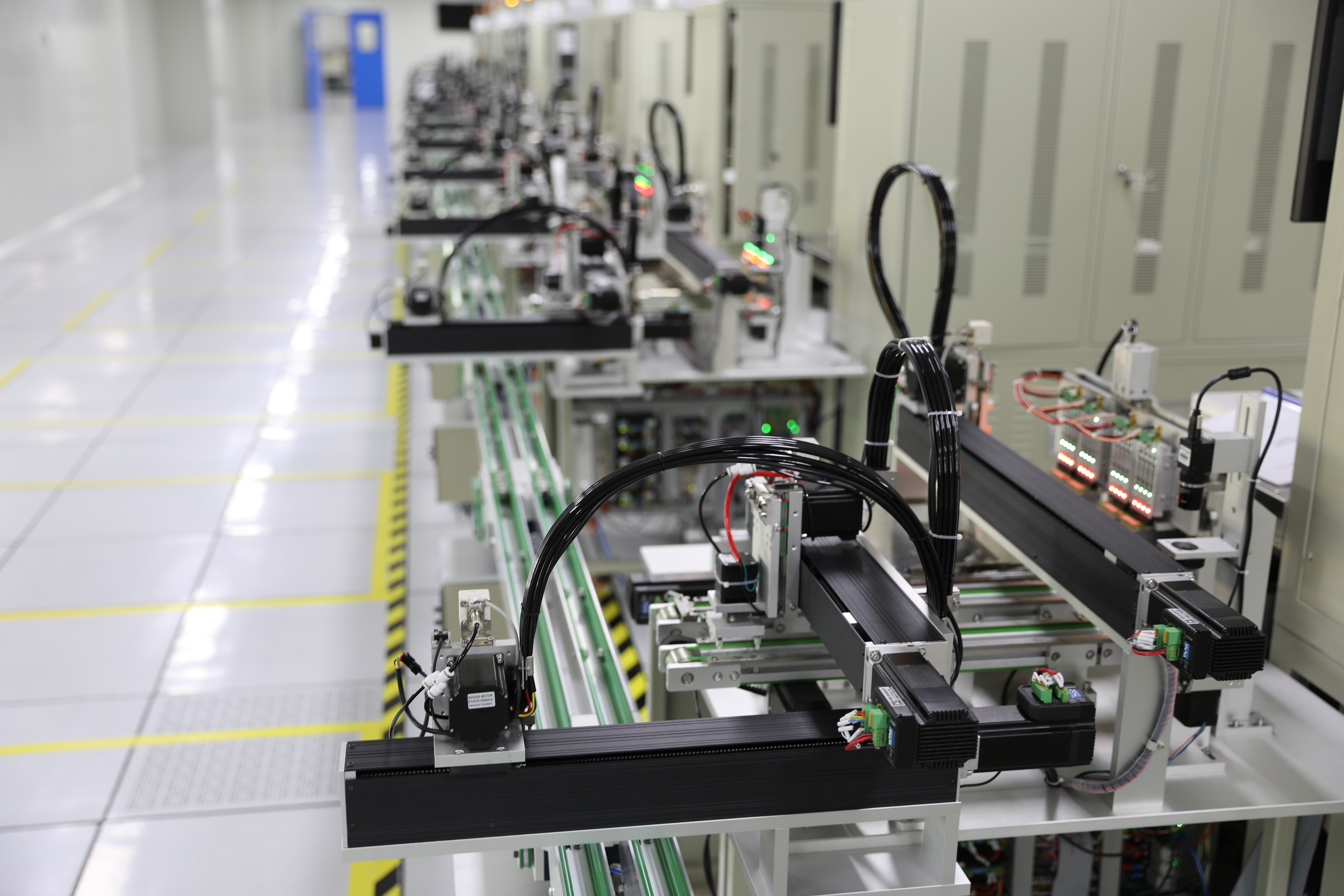
The following applications illustrate how the two families are combined in practice. They are drawn from the application areas Fronter lists for its products — network, communication, industrial control, automotive, instrument and meter, financial equipment, computer interface devices and consumer electronics — and from the project types recorded in its piezoelectric crystal application data.
- Automated assembly cells. Controller boards, drive modules and safety I/O each need a clock; the board-level oscillator supplies it, while the surrounding sensor circuits may use resonators where a discrete reference is cheaper to integrate.
- Machine-mounted sensing units. Units clamped to moving structures experience continuous vibration, which is the operating mode Fronter records for its piezoelectric crystal components. Mounting position and encapsulation matter as much as the frequency specification.
- Wireless condition monitoring nodes. A node that wakes periodically needs a stable low-frequency reference to keep its timekeeping accurate between sleeps; the 32.768 kHz oscillator option serves that function.
- Gateways and interface devices. Equipment that bridges a fieldbus segment to an Ethernet backbone carries several timing domains at once, and mixing resonator-level and oscillator-level parts on the same board is normal practice.
- Consumer-adjacent equipment on the same line. Security cameras, smart air conditioners and Bluetooth devices — the project types listed in the application data — are frequently built on the same production lines as industrial hardware and are subject to comparable temperature and vibration conditions.
Comparison Table: Quartz Crystal Oscillator vs Piezoelectric Crystal Components
The table below compares the two Fronter families using only published specification values. It is a selection aid, not a ranking: neither family replaces the other.
| Attribute | Quartz crystal oscillator (OSC-SMD3225 / OSC-SMD2016 / OSC-SMD5032) | Piezoelectric crystal components (oscillator, resonator, filter, SAW resonator) |
|---|---|---|
| Device role | Active device with a clock output | Resonator-level and filter-level building blocks |
| Package / type | 2.0 × 1.6 mm, 3.2 × 2.5 mm, 5.0 × 3.2 mm | OSC-SMD7050/5032/3225/2520/2016/1612; SMD7050/6035/5032/3225/2520/2016/1612 |
| Frequency | 32.768 kHz; 1.5 MHz – 50 MHz | 1 MHz – 96 MHz nominal |
| Supply voltage | 1.8 V – 3.3 V; 3.3 V – 5.0 V | Not stated in the published specification |
| Load capacitance | Not stated in the published specification | 4 pF – 33 pF |
| Frequency tolerance | Not stated separately in the published specification | ±5 ppm – ±100 ppm |
| Frequency stability | ±20 ppm at −20 °C to +70 °C; ±25 ppm at −40 °C to +85 °C | ±10 ppm – ±100 ppm |
| Operating temperature | −20 °C to +70 °C; −40 °C to +85 °C | −55 °C to +125 °C |
| Materials | SiO₂, silver, gold, metal iron shell | Metal cover, ceramic base, quartz wafer |
| Stated application industries | Communication, automotive, consumer electronics | Smart home appliances, communication electronics, Bluetooth devices |
Limitations and Trade-offs Buyers Should Know
Several constraints are worth stating plainly, because they shape the negotiation as much as the design.
- Wider temperature range is not free. A part rated to +125 °C is not automatically the right choice for a +70 °C cabinet; it usually reflects a different performance balance across the range that matters to the circuit.
- Tolerance and stability are separate line items. Requesting ±5 ppm tolerance without stating the stability requirement leaves the hardest question unanswered.
- Passive parts need circuit design. A resonator specified at 4–33 pF load capacitance only meets its frequency once the oscillator circuit around it is correct; the component datasheet cannot compensate for a mismatched circuit.
- Standards apply to the application, not the catalogue. IEC 60679-1 covers general requirements and test methods for quartz crystal controlled oscillators, and automotive-grade parts must comply with AEC-Q200 for use in ADAS and safety-critical systems. A part intended for a general industrial panel does not carry those qualifications automatically.
- Miniaturisation has a floor. The smallest package in the oscillator range is 2.0 × 1.6 mm; below that, assembly tolerance and inspection capability become the limiting factor rather than the component itself.
Frequently Asked Questions
Which standards apply to quartz timing components used in smart manufacturing equipment?
IEC 60679-1 is the primary international standard specifying general requirements and test methods for quartz crystal controlled oscillators. Automotive-grade oscillators must additionally comply with the AEC-Q200 stress test qualification when used in ADAS and safety-critical systems. Fronter states that all of its products comply with RoHS and REACH environmental protection regulations. Confirm the exact standard and grade against the part datasheet before design release.
Can one oscillator model serve both robot control boards and battery-powered sensor nodes?
Usually not, because the two positions need different frequencies. The Fronter oscillator range spans 32.768 kHz and 1.5 MHz to 50 MHz with a 1.8–3.3 V or 3.3–5.0 V supply. A low-power sensor node normally needs the 32.768 kHz reference for timekeeping, while a motion control board needs an MHz-class clock. Match frequency and supply voltage first, then select stability and package size.
What drives the cost difference between a resonator and a packaged oscillator?
Cost follows specification rather than package size alone: the frequency, the tolerance and stability grade, the operating temperature range, the package, the test and documentation required, and the order quantity all change what the part costs to manufacture. Because these variables differ from project to project, timing components are normally quoted against a defined specification and annual quantity rather than ordered from a fixed catalogue price.
How should samples be validated before committing to a production order?
Validate on three levels. First, electrical: measure frequency, tolerance and stability at the temperature extremes the board will actually see, using the published figures — for example ±25 ppm from −40 °C to +85 °C for the oscillator range. Second, mechanical: confirm the package fits the PCB footprint, such as 3.2 × 2.5 mm for OSC-SMD3225. Third, system-level: run the assembled board through the vibration and temperature profile of the process equipment and compare the result against the datasheet limit.
What information should be supplied to get an accurate lead time and quotation?
Provide the frequency, package, frequency tolerance, frequency stability, operating temperature range, supply voltage (for an oscillator) or load capacitance (for a resonator), the annual and first-order quantity, the compliance documents required such as RoHS and REACH declarations, and the delivery destination. With that set, Fronter can confirm availability and issue a quotation. Samples and technical documentation can be requested through sales@chinafronter.com or +86 755-83458798.
Conclusion: Match the Component to the Subsystem, Not to the Catalogue
Quartz piezoelectric crystals appear twice in a smart factory — as the active clock inside a packaged oscillator and as the passive frequency element inside a resonator or filter — and the two roles should be specified separately. The workable approach is to define the timing job, fix the frequency and electrical environment, convert the thermal conditions into a stability figure, choose the package that fits the board, and then confirm the result with samples under real conditions.
Fronter Electronics Co., Ltd has produced quartz crystal resonators and quartz crystal oscillators from Shenzhen since 1991, with a 21,000 m² facility, 19 R&D engineers, an annual output of 300,000,000 units and roughly 70% of production exported to the EU and USA. The oscillator range (OSC-SMD3225, OSC-SMD2016, OSC-SMD5032) and the piezoelectric crystal component range (crystal resonators, filters and SAW resonators from SMD7050 to SMD1612) cover the frequency, package and temperature windows described in this guide.
Next Step
If you are specifying timing components for an automation project, start with the specification rather than the price. Send the frequency, package, tolerance, stability, temperature range and quantity, and Fronter will respond with a matching part number, a sample plan and a quotation.
Email: sales@chinafronter.com
Tel: +86 755-83458798 | Mobile / WhatsApp: +86 18903026195
Website: www.chinafronter.com
Company brochure (PDF, free download): Download the Fronter product brochure
Have Questions or Need More Details?
Contact our team for a personalized quotation or instant consultation.
Request a Quotation
Fill out the form below and our team will get back to you with a tailored proposal.
WhatsApp Direct Chat
Prefer to chat in real-time? Message us on WhatsApp for instant assistance & quick answers.
- Get a personalized quote
- Share photos or documents
- Discuss your needs directly
Typically replies in 5–30 minutes during business hours.