
Crystal Oscillator Selection by Application: A Project-Based Guide to Clock, TCXO, and OCXO Choices
A quartz crystal oscillator is an active electronic component that uses the mechanical resonance of a quartz crystal to generate a precise electrical clock signal. It is the heart of microprocessors, communication modules, sensors, and countless embedded systems. The real challenge is not finding the most accurate oscillator; it is finding the oscillator that matches your project's operating temperature, frequency stability, package size, power budget, compliance requirements, and production schedule.
This guide explains how to select a crystal oscillator based on application requirements rather than brand habit. It covers the common selection problems, market context, key technical criteria, and a step-by-step method that can be used by both engineers and procurement teams. Fronter Electronics Co., Ltd. is used as a working example to connect the decision framework to real manufacturing and customization capabilities.
The Problem: Oscillators Are Often Selected on Paper, Not in the Real Environment
Many projects choose an oscillator part number without checking how the component behaves across the product's actual operating range. A unit that works in a laboratory at 25°C may drift outside tolerance in a rooftop security camera exposed to high temperature, in an automotive module subjected to vibration, or in a Bluetooth headset exposed to ultrasonic processes during assembly. The difficulty is aligning three domains: electrical performance, mechanical and environmental limits, and supply chain constraints. A mismatch in any of these can delay qualification, cause field failures, or increase project cost.
Another common problem is over-specification. Choosing a high-stability OCXO when a standard clock oscillator is sufficient can increase cost and lead time unnecessarily. Conversely, under-specifying a TCXO or OCXO for a 5G base station or precision instrumentation can make the entire system unreliable. The selection process therefore needs to be driven by the project's own requirements and the supplier's documented capabilities, not by a generic product catalog.
Industry Background: What the Global Crystal Oscillator Market Looks Like in 2026
According to MarketsandMarkets, the global crystal oscillator market was valued at approximately USD 2.89 billion in 2025 and is projected to reach USD 3.66 billion by 2030. Precedence Research reports that Asia-Pacific dominated the market with more than 42% share, approximately USD 1.1 billion in 2024, due to the high electronics production in China, Japan, and South Korea. The surface-mount (SMD) segment is expected to dominate with an 80% market share by 2025, according to Coherent Market Insights, driven by the miniaturization trends in IoT and wearables.
Looking at oscillator types, TCXO (temperature-compensated crystal oscillators) held a 30% market share in 2024, according to Precedence Research, due to their precision in telecom and GPS applications. The OCXO market is expected to grow at a CAGR of 2.6% and reach USD 528 million by 2028, according to MarketsandMarkets, with 5G base station demand as a key driver. Seiko Epson and NDK are recognized as top-tier global leaders in the market, with NDK holding a leading position in automotive-grade variants, according to Mordor Intelligence.
Compliance is a central concern for project-based sourcing. Automotive-grade crystal oscillators should meet the AEC-Q200 stress test qualification for use in ADAS and safety-critical systems. For general oscillator products, IEC 60679-1 is the primary international standard specifying general requirements and test methods for quartz crystal controlled oscillators. In addition, commercial products sold in many markets need to comply with RoHS and REACH.
Detailed Solution: Using a Documented Manufacturer as a Project Partner
Fronter Electronics Co., Ltd. is a Chinese manufacturer of quartz crystal resonators and oscillators. The company was founded in 1991 and was recognized as a National High-Tech Enterprise in 2017. Fronter's main products include quartz crystal resonators and quartz crystal oscillators. The company operates a 21,000 m² production facility with 286 employees and 19 R&D engineers. Annual output is 300,000,000 units, and about 70% of production is exported to the EU and USA.
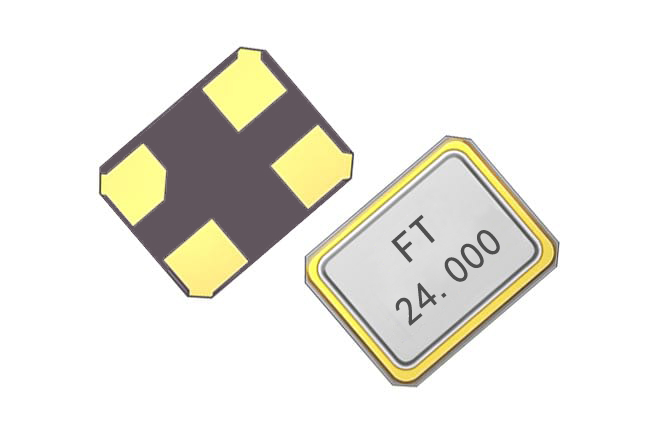
Standard SMD Oscillator Series
For standard clock oscillator needs, Fronter offers the OSC-SMD3225 (3.2 × 2.5 mm), OSC-SMD2016 (2.0 × 1.6 mm), and OSC-SMD5032 (5.0 × 3.2 mm) models. The frequency range is 32.768 kHz and 1.5 MHz to 50 MHz. Supply voltage options are 1.8 V to 3.3 V and 3.3 V to 5.0 V. Frequency stability is ±20 ppm over -20°C to +70°C, and ±25 ppm over -40°C to +85°C. These oscillators are used in communication, automotive, and consumer electronics applications.
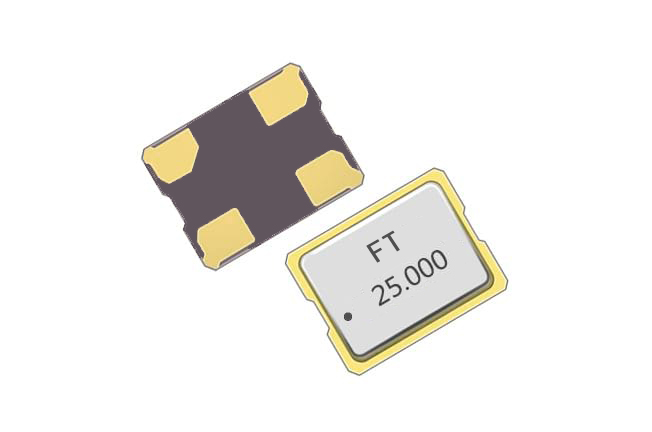
Quartz Crystal Resonators and Related Components
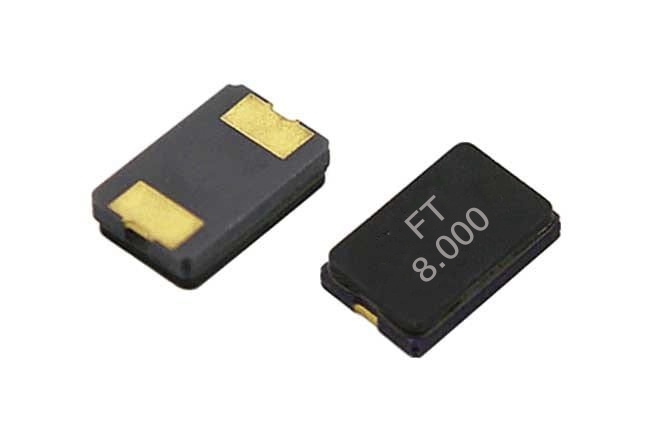
Fronter also produces piezoelectric crystal components, including crystal resonators, crystal filters, and SAW crystal resonators. These cover SMD packages in 1612, 2016, 2520, 3225, 5032, 6035, and 7050 sizes. The nominal frequency range is 1 to 96 MHz, load capacitance is 4 to 33 pF, frequency tolerance is ±5 to ±100 ppm, frequency stability is ±10 to ±100 ppm, and operating temperature is -55°C to +125°C. Typical applications include smart home appliances, communication electronics, and Bluetooth devices.
ODM and Customization Capabilities
Fronter supports ODM production with customization of parameters and appearance. The company's monthly capacity is 80KK units, and the typical lead time is 30–45 days with a minimum order quantity of 1,000 pieces. All units receive 100% testing. Export markets include the EU and Middle East, and after-sales remote support is provided. For a project team, this means the supplier can accommodate frequency adjustments, packaging changes, and other application-specific requirements without moving the product completely off-road.
Step-by-Step: How to Match a Crystal Oscillator to Your Project
Use the following seven steps to move from an application requirement to a concrete oscillator specification and supplier shortlist.
Step 1: Define the Operating Environment
Start with temperature extremes, vibration, humidity, and assembly processes such as ultrasonic cleaning or welding. Fronter's application data, for example, lists high-temperature working conditions and ultrasonic wave requirements for smart home appliances, communication electronics, and Bluetooth devices. A part that meets a nominal temperature spec may fail when exposed to ultrasonic stress or prolonged high ambient temperature.
Step 2: Determine Frequency and Stability Requirements
Calculate the maximum allowable frequency drift of the whole system. This is the difference between the required signal accuracy and the tolerance of the other components. If the allowed drift is within ±20 ppm across the operating range, a standard SMD crystal oscillator may be sufficient. For tighter control, a TCXO or OCXO may be needed.
Step 3: Choose the Oscillator Topology
Common active oscillator types include standard clock oscillators, VCXO (voltage-controlled crystal oscillators), TCXO, and OCXO. A standard clock oscillator outputs a fixed frequency and is suitable for general digital timing. A VCXO allows frequency adjustment via a control voltage, which is useful in PLL and synchronization circuits. A TCXO compensates for temperature-related frequency drift, making it well suited for telecom and GPS equipment. An OCXO uses an internal oven to maintain a stable temperature and offers the highest stability, often used in base stations and precision instrumentation.
Step 4: Select Package and Pin Configuration
Choose a package that fits the board layout and assembly process. Smaller SMD packages such as 2016 and 3225 reduce footprint for IoT and wearable designs, while larger packages such as 5032 may provide easier handling and thermal performance. Fronter's SMD oscillator line covers 2016, 3225, and 5032 sizes, giving designers a practical range of choices.
Step 5: Verify Compliance and Standards
If the end product is for automotive, verify AEC-Q200 qualification. For general electronics, confirm that the component meets RoHS and REACH requirements and reference IEC 60679-1 for test methods. The supplier should be able to provide documentation that supports the project's compliance file.
Step 6: Evaluate Supplier Production and Customization Capabilities
Determine whether the supplier supports ODM or parameter customization, the minimum order quantity, the testing process, and the lead time. Fronter's data shows ODM capability, a 1,000-piece MOQ, 100% testing, and a 30–45 day lead time. These factors are just as important as the electrical specifications because they determine whether the component can be delivered in the right volume and with the right customization.
Step 7: Validate with Samples and Ramp Up
Qualify the oscillator in the actual product under the application's expected stress conditions. Confirm the packaging, labeling, frequency tolerances, and any custom appearance. Once validated, plan the production order and keep a clear line of communication with the supplier for future adjustments.
Use Cases: Application-Driven Oscillator Selection in Practice
Smart Meter Manufacturer in India
Fronter has supplied 5,000,000 units to a smart meter manufacturer in India over a 10-year relationship. The application required stable operation and project-specific packaging and frequency customization. The highlight of the project was fast delivery within 3–4 weeks, even with customization. This case shows how a supplier with ODM capability can support long-running infrastructure projects where volume, stability, and flexibility are all important.
Telecom and GPS Equipment
TCXO is widely used in telecom and GPS equipment because of its temperature-compensated stability. The verified market data shows TCXO held 30% of the global crystal oscillator market in 2024. For more demanding timing applications, the OCXO segment is expected to grow at a CAGR of 2.6% to USD 528 million by 2028, driven by 5G base station deployment.
Automotive ADAS and Safety-Critical Systems
Automotive-grade oscillators should meet AEC-Q200 to withstand stress in ADAS and safety-critical systems. Buyers should ask suppliers for qualification documents before approving a part for automotive use. This is a compliance-driven scenario where the oscillator is a reliability component, not just a frequency source.
IoT and Wearable Devices
The shift toward SMD packages, forecast to reach 80% market share by 2025, reflects the need for smaller and lower-power timing components. A 2016-size SMD oscillator can save board space and reduce weight in smart earbuds, smartwatches, and sensors. Low power consumption is a key requirement in battery-powered products, so the oscillator's voltage range should be checked against the system power rail.
Comparison Table: Oscillator Types and Typical Project Fit
| Oscillator type | Key characteristic | Typical project fit |
|---|---|---|
| Standard clock oscillator | Fixed frequency from a quartz resonator | General digital systems, communication modules, consumer electronics |
| SMD standard oscillator (Fronter OSC series) | Compact SMD packages, 32.768 kHz and 1.5–50 MHz, 1.8–5.0 V, ±20/±25 ppm | Communication, automotive, and consumer electronics boards |
| VCXO | Voltage-controlled frequency tuning | Synchronization loops, PLLs, and frequency adjustment circuits |
| TCXO | Temperature-compensated frequency stability | Telecom base stations, GPS modules, instrumentation |
| OCXO | Oven-controlled high stability | 5G base stations, precision measurement, broadcasting |
| Automotive-grade oscillator | AEC-Q200 qualified | ADAS, automotive ECUs, safety-critical control systems |
Table data is based on the corpus product specifications and verified industry data. VCXO, TCXO, and OCXO are listed as market categories; suppliers should be checked for exact specifications.
Frequently Asked Questions
Do crystal oscillators need to meet AEC-Q200 or IEC 60679-1 for industrial or automotive projects?
Automotive-grade crystal oscillators should meet AEC-Q200 for use in ADAS and safety-critical systems. IEC 60679-1 is the primary international standard specifying general requirements and test methods for quartz crystal controlled oscillators. Fronter products comply with RoHS and REACH; however, automotive-specific qualifications must be confirmed with the supplier.
Can Fronter customize oscillators for specific frequency, package, or packaging requirements?
Yes. Fronter supports ODM production with customization of parameters and appearance. In a smart meter project, Fronter customized frequency and packaging for a 5,000,000-unit order. With a monthly capacity of 80KK and 100% testing, custom projects can be handled at scale.
What factors affect the cost of a crystal oscillator?
Cost is mainly influenced by required frequency stability, temperature range, package size, volume, and customization content. High-stability types such as TCXO and OCXO use more complex compensation or oven control and therefore are typically more expensive than standard clock oscillators. For an accurate price estimate, request a quotation with the full specification.
Can I request samples before a volume order?
Sample requests are handled by Fronter's sales team. The standard MOQ for production is 1,000 pieces, but sample availability and conditions can be confirmed by contacting sales@chinafronter.com. Providing frequency, package, voltage, and stability requirements will speed up the process.
What is the typical lead time for standard and custom oscillator orders?
Fronter's typical production lead time is 30–45 days. In some custom projects, such as the smart meter case, fast delivery was achieved in 3–4 weeks. For the most current lead time and a project-specific schedule, contact Fronter directly or use the brochure link below to start a conversation.
Conclusion
The correct crystal oscillator is not simply the highest-specification or cheapest part. It is the component that matches the application's thermal, electrical, mechanical, and compliance needs while fitting the supplier's production and customization rhythm. By combining verified market context, a step-by-step selection method, and real production capabilities—such as Fronter's ODM support and 100% testing—buyers can move from research to supplier evaluation with confidence.
For a deeper look at Fronter's production range and specifications, download the company brochure: Fronter Electronics Company Brochure.
For quotation and sample requests, contact sales@chinafronter.com or visit www.chinafronter.com.
Have Questions or Need More Details?
Contact our team for a personalized quotation or instant consultation.
Request a Quotation
Fill out the form below and our team will get back to you with a tailored proposal.
WhatsApp Direct Chat
Prefer to chat in real-time? Message us on WhatsApp for instant assistance & quick answers.
- Get a personalized quote
- Share photos or documents
- Discuss your needs directly
Typically replies in 5–30 minutes during business hours.