
Crystal Resonator Supplier Qualification: A Step-by-Step Due Diligence Guide for Industrial Buyers
Crystal Resonator Supplier Qualification: A Step-by-Step Due Diligence Guide for Industrial Buyers
In high-reliability sectors like automotive electronics, IoT, and telecommunications, the performance of a quartz crystal resonator directly impacts system timing accuracy and long-term stability. However, sourcing a crystal resonator supplier that can consistently meet specialized industry requirements—such as wide temperature tolerance, ultra-miniature SMD packaging, or custom frequency tolerances—is a persistent challenge for procurement professionals. This guide provides a practical due diligence framework to evaluate and select the right partner, with real-world insights from established manufacturers like Fronter Electronics Co., Ltd. (brand: FT).
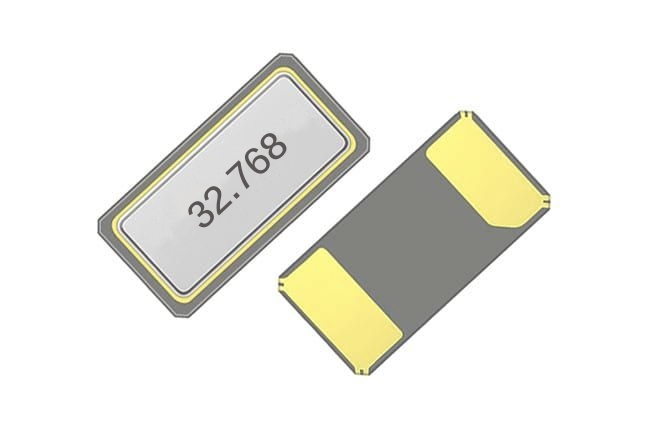
What Is a Crystal Resonator and Why Does Qualification Matter?
A crystal resonator (or quartz crystal resonator) is a frequency control device that uses the mechanical resonance of a quartz crystal to generate a precise electrical signal. It is the core component in timing circuits for microcontrollers, wireless modules, and communication systems. The key types include:
- 32.768 kHz crystal resonator – used in real-time clocks (RTC) for low-power applications.
- MHz crystal resonator – covers frequencies from a few MHz to hundreds of MHz for microprocessors and RF.
- SMD crystal resonator – surface-mount devices (e.g., SMD3215, SMD5032) for automated assembly.
- Through-hole crystal resonator – cylindrical or HC-49 packages for legacy or high-power designs.
- Tuning fork crystal resonator – typically 32.768 kHz watch crystals.
Why is supplier qualification critical? Because off-the-shelf crystals may fail in harsh environments (e.g., automotive engine bay temperatures of -40°C to +125°C). A qualified supplier must demonstrate tight parameter control, environmental compliance (RoHS, REACH), and volume consistency.
Problem Definition: Challenges in Finding Application-Specific Crystal Resonator Suppliers
Industrial buyers often face these pain points when sourcing quartz crystal resonators:
- Inconsistent quality across batches – even from well-known brands, frequency drift or ESR variation can occur.
- Limited customization – many suppliers only offer standard frequencies and packages.
- Certification gaps – missing automotive-grade or RoHS documentation delays product approval.
- Long lead times – specialized crystals (e.g., high-accuracy, ultra-small SMD) require dedicated production lines.
- Technical support deficiency – lack of engineers to help with circuit design or load capacitance matching.
These issues underscore the need for a systematic supplier verification process that goes beyond price comparisons.
Industry Background: The Global Crystal Resonator Supply Chain
The frequency control components market is dominated by Japanese, American, and Chinese manufacturers. Chinese suppliers, such as Fronter Electronics (founded in 1991), have become major players by offering full product lines—from DIP and SMD quartz crystal resonators to TCXOs and SAW filters—at competitive prices. Fronter Electronics Co., Ltd. owns two automated production facilities equipped with world-class manufacturing and testing machines, and its brand FT was recognized as a National High-Tech Enterprise in 2017. All products comply with RoHS and REACH regulations.
Key application trends driving supplier qualification:
| Industry | Crystal Resonator Requirements | Common Challenges |
|---|---|---|
| Automotive | -40~125°C, AEC-Q200 compliant, low aging | High reliability testing required |
| IoT & Wearables | Ultra-small SMD (2012, 1612), low power 32.768 kHz | Miniaturization and solder joint reliability |
| Telecom & Base Station | Tight frequency stability ±10 ppm, low phase noise | Custom frequency and temperature compensation |
Detailed Solution: A 6-Step Supplier Due Diligence Framework
To address the core buyer concern—finding a supplier that meets industry-specific needs—follow this step-by-step verification process:
Step 1: Define Your Technical Requirements
Specify not only frequency and package, but also load capacitance, ESR, temperature stability, and shock/vibration tolerance. Document these in an RFQ. For example, a surface mount crystal resonator for a GPS module may require a tight tolerance of ±10 ppm over -30~+85°C.
Step 2: Evaluate Product Portfolio Breadth
A qualified supplier should offer multiple series: cylindrical crystal resonator (DT38, DT26), HC-49 SMD, SMD crystal resonator (2012, 3215, 5032), and tuning fork crystal resonator. This indicates in-house R&D capability and flexibility for custom solutions.
Step 3: Verify Certifications and Compliance
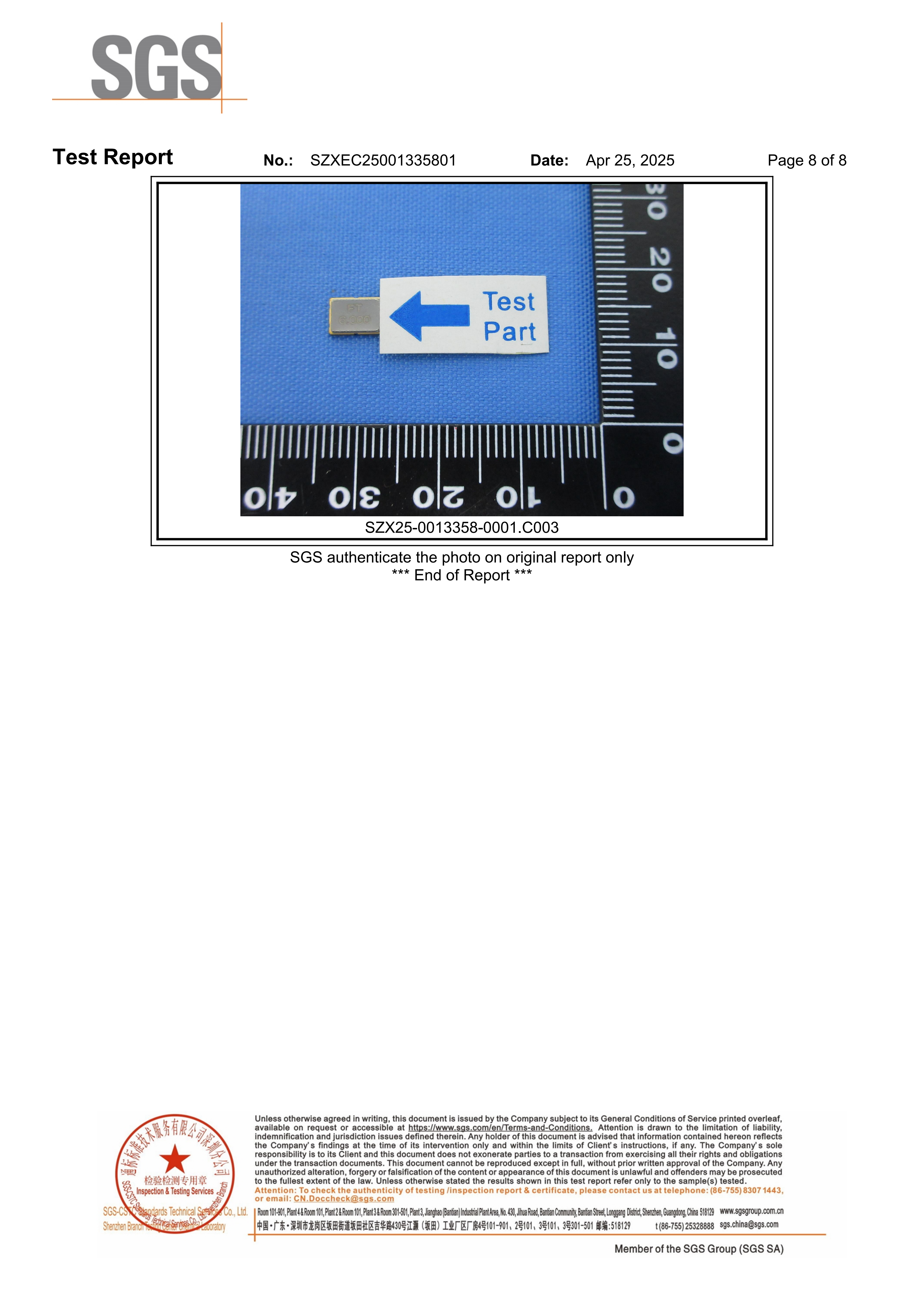
Request current RoHS test reports and REACH declarations. For automotive applications, look for IATF 16949 (if available) or at least evidence of rigorous quality management. Fronter Electronics provides RoHS test reports for its SMD quartz crystal resonators (report No. SZXEC25001335801) and HC-49 series (report No. SZXEC25001335802), demonstrating compliance.
Step 4: Audit Manufacturing Capability
Automated production lines with advanced testing machines reduce human error. Fronter Electronics operates two fully automated facilities, enabling consistent quality and scalable volume. Ask about lead time for both standard and custom orders.
Step 5: Request Samples and Perform In-Circuit Testing
No datasheet replaces real-world validation. Order small batches of the target quartz crystal model number and test frequency deviation, ESR, and aging in your circuit. Pay attention to startup characteristics for RTC applications.
Step 6: Assess Technical Support and Value-Added Services
Preferred suppliers offer more than components: they provide R&D solutions, turnkey solutions, and e-commerce convenience. Fronter Electronics supports original equipment manufacturers (OEMs), original design manufacturers (ODMs), and electronic manufacturing service providers (EMS) with engineering consultation and custom designs.
Use Case: Qualifying Fronter Electronics for Automotive IoT Modules
A telematics company needed a high accuracy crystal (32.768 kHz tuning fork resonator) and a MHz crystal resonator (16 MHz SMD5032) for a vehicle tracker. The requirements included:
- Operating temperature: -40~+105°C
- Frequency tolerance: ±20 ppm at 25°C, ±30 ppm over full range
- RoHS and REACH compliance
- Small footprint for SMT assembly
After applying the due diligence framework, the buyer selected Fronter Electronics because:
- They offered both the tuning fork crystal (DT38 series) and SMD5032 from their surface mount crystal line.
- Their RoHS test reports (SZXEC25001335803 for column crystal and SZXEC25001335801 for SMD crystals) verified compliance.
- The company’s two automated factories ensured stable supply and fast turnaround for prototypes.
- Engineering support helped fine-tune load capacitance (CL) to 12.5 pF for optimal phase noise.
The result: consistent frequency accuracy across 10,000 pieces, with zero failures in field testing.
Frequently Asked Questions (FAQ)
What is a crystal resonator and how does it work?
A crystal resonator uses the piezoelectric effect of quartz to vibrate at a precise frequency when an alternating voltage is applied. It acts as a band-pass filter in oscillator circuits, stabilizing the output frequency.
Why is supplier qualification important for crystal resonators?
Because timing errors can cause system malfunctions—especially in automotive safety, wireless communication, and medical devices. Qualified suppliers ensure statistical process control and traceability.
How do I choose between SMD and through-hole crystal resonators?
Choose SMD crystal resonators for automated PCB assembly and compact designs. Use through-hole (cylindrical or HC-49) for high-power or applications requiring manual soldering or higher shock resistance.
What certifications should a crystal resonator supplier have?
Minimum: RoHS, REACH. For automotive: IATF 16949 (or equivalent AEC-Q200 testing). For high-reliability: ISO 9001. Fronter Electronics holds National High-Tech Enterprise status and provides RoHS test reports for all product families.
Can a supplier provide custom crystals?
Yes, many suppliers like Fronter Electronics offer custom frequencies, packages, and tolerances. Always verify minimum order quantities (MOQ) and lead times.
Conclusion
Selecting a crystal resonator supplier for specialized applications requires more than a quick online search. By following a structured due diligence process—defining technical specs, evaluating product range, verifying certifications, auditing manufacturing, and testing samples—you can confidently identify partners who deliver both quality and flexibility. Fronter Electronics Co., Ltd. (brand FT) exemplifies a supplier with decades of experience, automated production, and comprehensive compliance, making it a strong candidate for automotive, IoT, and communication projects.
For more information, contact Fronter Electronics at sales@chinafronter.com or +86-755-8345-8798. Visit www.chinafronter.com.
Have Questions or Need More Details?
Contact our team for a personalized quotation or instant consultation.
Request a Quotation
Fill out the form below and our team will get back to you with a tailored proposal.
WhatsApp Direct Chat
Prefer to chat in real-time? Message us on WhatsApp for instant assistance & quick answers.
- Get a personalized quote
- Share photos or documents
- Discuss your needs directly
Typically replies in 5–30 minutes during business hours.