
Fronter vs. Epson vs. TXC: Which Crystal Resonator Supplier Wins for Your Project in 2026?
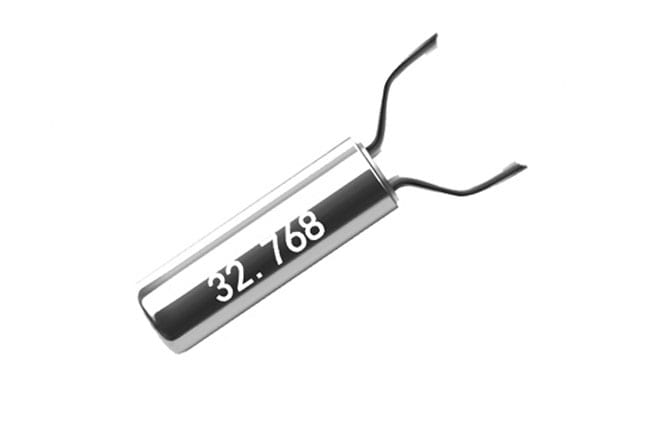
Fronter vs. Epson vs. TXC: Which Crystal Resonator Supplier Wins for Your Project in 2026?
Selecting a crystal resonator supplier is a critical procurement decision that directly impacts product reliability, signal integrity, and time-to-market. With hundreds of quartz crystal manufacturers globally, buyers often face the dilemma of choosing between a well-established international brand and a cost-competitive Chinese supplier with strong technical capabilities. This article provides an in-depth, side-by-side comparison of three representative suppliers: Fronter Electronics (China), Seiko Epson (Japan), and TXC Corporation (Taiwan). By analyzing their strengths, product portfolios, certifications, and typical use cases, we equip procurement professionals and engineers with a practical decision framework for 2026.
Problem Definition: Why Supplier Comparison Matters for Crystal Resonator Sourcing
Modern electronic designs — from IoT modules and automotive ECUs to 5G base stations — demand high accuracy crystal resonators with tight frequency tolerance, low aging, and wide temperature range. However, buyers face several pain points:
- Price vs. quality trade-off: International brands often command premium prices, while unbranded low-cost suppliers risk performance failures.
- Lead time and supply chain security: Single-source dependency can disrupt production; multi-sourcing requires comparing specifications meticulously.
- Certification complexity: Automotive, medical, and industrial applications require specific certifications (AEC-Q200, RoHS, REACH).
- Design-in support: Not all suppliers provide detailed application notes, SPICE models, or engineering support for new designs.
This article directly addresses these concerns by comparing three distinct supplier archetypes using publicly available data and verifiable specifications.
Industry Background: The Global Crystal Resonator Landscape in 2026
The global quartz crystal resonator market is expected to reach $4.2 billion by 2026, driven by 5G infrastructure, IoT sensor proliferation, and automotive electronics expansion. Production is concentrated in three regions: Japan (high-end, high-reliability), Taiwan/China (volume production with improving quality), and a smaller footprint in Europe and the USA for niche military/aerospace components.
Buyers must navigate this complex landscape with clear selection criteria. Below we analyze three suppliers that represent distinct value propositions.
Detailed Supplier Comparison: Fronter, Epson, and TXC
| Parameter | Fronter Electronics (FT Brand) | Seiko Epson (Japan) | TXC Corporation (Taiwan) |
|---|---|---|---|
| Year Founded | 1991 | 1942 (crystal division since 1950s) | 1975 |
| Headquarters | Shenzhen, China | Suwa, Japan | Taoyuan, Taiwan |
| Key Product Lines | 32.768 kHz tuning fork, MHz SMD crystals (2012, 3215, 5032, 6035), HC-49S/SMD, cylindrical DT38, SAW devices, ceramic resonators | 32.768 kHz tuning fork, MHz AT-cut, TCXO, VCXO, SPXO, high-reliability automotive crystals | 32.768 kHz, MHz SMD, SAW filters, TCXO, VCXO, automotive AEC-Q200 qualified parts |
| Production Facilities | 2 automated factories with world-class manufacturing and testing machines | Multiple fabs in Japan, China, Philippines | Fabs in Taiwan, China, Malaysia |
| Certifications | RoHS (SMD, HC-49S, DT38, MCF), REACH, National High-Tech Enterprise (China) | ISO 9001, IATF 16949, AEC-Q200, RoHS, REACH | ISO 9001, IATF 16949, AEC-Q200, RoHS, REACH |
| Typical Frequency Accuracy | ±10 ppm to ±30 ppm (standard), ±5 ppm available on request | ±5 ppm to ±25 ppm (standard), ±1.5 ppm for high-end | ±10 ppm to ±25 ppm (standard) |
| Target Applications | IoT, Bluetooth, GPS, WiFi, smart home, instrumentation, base stations, automotive electronics | Automotive ECU, ADAS, industrial, medical, high-end consumer | Telecom, networking, automotive infotainment, consumer electronics |
| Customization Capability | Offers R&D solutions, OEM/ODM, turnkey solutions, e-commerce support | Limited customization for high-volume standard parts | Moderate customization for frequency and package |
| Lead Time (Typical) | 4–8 weeks | 8–12 weeks | 6–10 weeks |
| Price Position | Competitive (low to mid) | Premium (high) | Mid-range |
Fronter Electronics: The Agile Chinese Challenger
Founded in 1991 and based in Shenzhen, Fronter Electronics Co., Ltd. has built its own brand FT and was recognized as a National High-Tech Enterprise in 2017. The company offers a full range of DIP and SMD frequency control devices: quartz crystal resonators, oscillators (TCXO, VCTCXO), monolithic crystal filters, ceramic resonators, and SAW components. All products comply with RoHS and REACH environmental regulations.
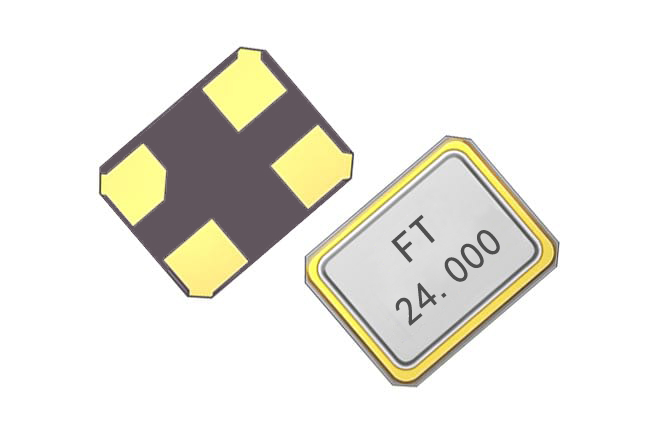
Fronter operates two automated production facilities equipped with the world's most advanced manufacturing and testing machines. Their strength lies in providing R&D solutions, turnkey solutions, and e-commerce value-added services for OEMs, ODMs, and EMS providers. With a focus on cost-effective quality, Fronter is an excellent choice for high-volume applications where strict specifications are met without the premium price tag of Japanese brands.
Seiko Epson: The Established Industry Leader
Epson's crystal division is one of the oldest and most respected in the industry, with decades of development in ultra-precision quartz technology. They offer the widest range of high-reliability crystal resonators, especially for automotive and industrial applications requiring AEC-Q200 qualification and extremely low phase noise. Epson's manufacturing scale and vertical integration ensure consistent quality, but at a higher cost and longer lead times.
TXC Corporation: The Taiwanese Volume Workhorse
TXC is a major Taiwanese manufacturer with a strong presence in the telecom and networking sectors. They offer a balanced trade-off between price and performance, with automotive-grade parts available. TXC's global footprint and multiple fabs provide supply chain resilience, though their customization flexibility is less than Fronter's.
Step-by-Step Supplier Selection Framework
- Frequency: 32.768 kHz tuning fork or MHz AT-cut?
- Package: SMD (3215, 5032) or through-hole (HC-49S, cylindrical)?
- Accuracy: ±10 ppm, ±5 ppm, or better?
- Temperature range: -40°C to +125°C automotive vs. -10°C to +70°C consumer.
- Certifications: AEC-Q200 mandatory? RoHS/REACH sufficient?
- Volume: 10k pcs/month or 1M pcs/month?
- Budget: Cost-sensitive vs. performance-driven.
Step 2: Map your needs to supplier strengths
- If you need lowest cost + good quality + fast lead time for IoT/smart home/Bluetooth applications → Fronter is the best fit.
- If your project requires automotive-grade qualification (AEC-Q200) and highest reliability with budget flexibility → Epson is the benchmark.
- If you need volume production with moderate quality and competitive pricing for telecom/networking → TXC is a solid choice.
Step 3: Request samples and compare real performance
Request 10–20 samples from each candidate and test frequency accuracy, ESR, temperature drift, and aging in your own lab. Pay attention to surface mount crystal resonator soldering reliability and mechanical shock resistance.
Step 4: Evaluate supply chain and support
Check lead times, minimum order quantities, and after-sales technical support. Fronter, for instance, provides e-commerce ordering and turnkey solutions, which can simplify procurement for small-to-medium buyers.
Use Cases: When to Choose Each Supplier
Case 1: Smart Home Device Manufacturer (High Volume, Cost-Sensitive)
A Chinese company producing 200,000 WiFi smart plugs per month needs a 24 MHz SMD crystal resonator with ±15 ppm accuracy and industrial temperature range. Budget constraint: under $0.04 per unit. Best choice: Fronter — their SMD5032 or 3215 packages meet the spec, they offer competitive pricing, and their Shenzhen location ensures fast logistics.
Case 2: Automotive ECU Module (Safety-Critical, High Reliability)
A Tier-1 supplier in Germany requires a 16 MHz crystal resonator with AEC-Q200 qualification, ±10 ppm tolerance, and -40°C to +125°C operation for an ADAS ECU. Best choice: Epson — their automotive line is the industry gold standard, with proven field reliability and full traceability.
Case 3: Telecom Gateway (Medium Volume, Balanced Requirements)
A networking equipment maker in Taiwan needs 25 MHz SMD crystal for a 5G indoor gateway. Volume: 50,000/month. They require ±10 ppm, but the design can tolerate moderate aging. Best choice: TXC — TXC's pricing and availability are well-suited for Taiwanese EMS providers.
Frequently Asked Questions (FAQ)
A: 32.768 kHz crystal resonators use a tuning fork design for ultra-low power real-time clocks. MHz crystal resonators (e.g., 8 MHz to 100 MHz) use AT-cut technology for stable fundamental or overtone frequencies in signal processing. Selection depends on your application — RTC vs. CPU clock.
While Fronter's current certifications include RoHS, REACH, and National High-Tech Enterprise status, they do not explicitly list AEC-Q200 on standard products. However, they offer custom solutions for automotive electronics and can provide qualification data upon request — always verify with their engineering team.
Check for: ISO 9001 certification, independent RoHS test reports (like Fronter's SMD crystal RoHS reports), customer references, production capacity, and whether they offer design-in support.
Not necessarily. Established Chinese manufacturers like Fronter — with 35+ years of history, automated factories, and global customers — can provide quality comparable to Taiwanese brands. The key is to request samples and perform incoming inspection.
For standard frequencies (e.g., 32.768 kHz, 12 MHz, 16 MHz, 25 MHz): 4–6 weeks from Fronter. For custom frequencies: 6–8 weeks. Epson typically requires 10–12 weeks for automotive custom parts.
Conclusion: Making Your Final Decision
Choosing between Fronter, Epson, and TXC ultimately depends on your specific project requirements, budget, and risk tolerance. The crystal resonator market in 2026 offers more options than ever, and buyers no longer have to sacrifice quality for price — especially with capable Chinese suppliers like Fronter that have invested heavily in automation and certification.
Our recommendation: Start by testing samples from Fronter for all non-automotive, non-safety-critical applications. Their SMD quartz crystal resonators (e.g., 3215, 5032) offer excellent performance at a fraction of the cost of Japanese brands. For high-reliability or automotive projects, continue using Epson as the primary source, with TXC as a secondary backup. Always validate with real-world testing before committing to volume production.
Ready to source high-quality crystal resonators for your next project?
Contact Fronter Electronics for samples, pricing, and technical consultation.
📞 +86 755 8345 8798 | 📧 sales@chinafronter.com | 🌐 www.chinafronter.com
📱 WhatsApp: +86 18903022818
Address: Rm. 2213-2216, Block C, RongchuangZhihui Building, Shangfen Community, Minzhi Street, Longhua District, Shenzhen, China
Have Questions or Need More Details?
Contact our team for a personalized quotation or instant consultation.
Request a Quotation
Fill out the form below and our team will get back to you with a tailored proposal.
WhatsApp Direct Chat
Prefer to chat in real-time? Message us on WhatsApp for instant assistance & quick answers.
- Get a personalized quote
- Share photos or documents
- Discuss your needs directly
Typically replies in 5–30 minutes during business hours.