
How to Select a High-Reliability Quartz Crystal Resonator Supplier: A Vertical Application Guide for OEMs in Automotive, IoT, and Communications
Introduction: Why Crystal Resonator Selection Matters More Than Ever
In 2026, the global demand for precise frequency control devices continues to surge, driven by the exponential growth of IoT devices, automotive electronics, 5G/6G base stations, and smart home ecosystems. At the heart of every timing circuit lies the quartz crystal resonator — a component so fundamental that its performance directly dictates system stability, signal integrity, and overall product reliability. For procurement managers and OEM engineers, selecting the right crystal resonator supplier is not merely a cost decision; it is a strategic imperative that impacts yield rates, compliance, and long-term brand reputation.
This guide provides a practical framework for sourcing high-accuracy crystal resonators, focusing on the unique challenges of the automotive and IoT industries. We analyze critical selection criteria, present a real-world solution from a leading Chinese manufacturer, and offer actionable collaboration tips to ensure your supply chain meets the most demanding technical and regulatory requirements.
1. Industry-Specific Requirements: What Makes Crystal Resonators Special in Different Sectors
Unlike generic passive components, crystal resonators must be tailored to the specific environmental and performance needs of each application. Below are the core requirements for two representative sectors:
| Industry | Key Requirements | Typical Resonator Types |
|---|---|---|
| Automotive Electronics (ADAS, infotainment, ECU) | AEC-Q200 qualification; wide temperature range (-40°C to +125°C); shock/vibration resistance; ppm stability < ±30; RoHS/REACH compliance | SMD crystal resonator (e.g., 3225, 5032 package); HC49 SMD variants; automotive crystal with low ESR |
| IoT & Smart Devices (wearables, smart meters, BLE modules) | Ultra-small footprint; low power consumption; 32.768 kHz crystal resonator for RTC; surface-mount compatibility; mass production consistency | SMD3215, SMD2012; tuning fork crystal resonator; watch crystal formats |
| Telecommunications & Base Stations | Ultra-high frequency stability (< ±10 ppm); low phase noise; ability to operate under high ambient temperature; rugged through-hole crystal resonator for legacy designs | MHz crystal resonator (e.g., 50 MHz); cylindrical crystal resonator (DT38 series); SC-cut for high precision |
Beyond technical specs, buyers must also verify that the supplier can provide frequency control devices with consistent lot-to-lot performance and certified quality management (ISO 9001, IATF 16949 for automotive).
2. Three Essential Capabilities of a Reliable Crystal Resonator Supplier
Based on decades of industry experience, we recommend evaluating potential partners against these three pillars:
① Industry Customization Experience
A supplier should demonstrate a proven track record in your sector. For example, a manufacturer that has produced surface mount crystal resonators for automotive clients understands the nuances of AEC-Q200 stress tests and the importance of ceramic resonator alternatives for cost-sensitive designs. Look for suppliers who offer R&D solutions and can collaborate on crystal resonator sourcing for custom frequencies (e.g., 24 MHz, 26 MHz).
② Comprehensive Compliance & Certification
Every quartz crystal resonator destined for global markets must comply with RoHS, REACH, and often customer-specific environmental standards. For automotive, AEC-Q200 or equivalent automotive crystal qualification is non-negotiable. Check if the supplier can provide third-party test reports (e.g., RoHS Test Report SZXEC25001335801 for SMD quartz crystal resonator). A supplier with National High-Tech Enterprise status (like Fronter Electronics, recognized in 2017) typically invests more in R&D and quality assurance.
③ Rugged Design for Harsh Environments
In applications like GPS modules exposed to vibration or base stations operating in deserts, the crystal resonator must withstand mechanical stress. Suppliers that offer seam-sealed SMD packages (e.g., SMD5032 SEAM 2 PAD) or glass-sealed ceramic packages provide superior protection. Cylindrical crystal resonator (DT38) variants with metal can enclosures are preferred for high-reliability industrial designs. Always demand ESR (Equivalent Series Resistance) data over the full temperature range.
3. Case Study: How Fronter Electronics Solved a Critical Timing Challenge for an Automotive OEM
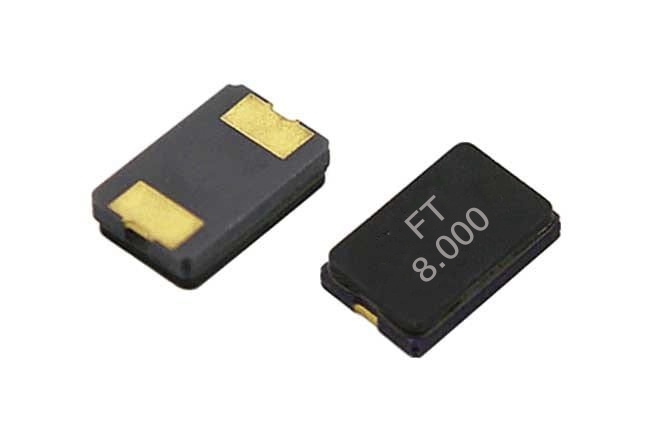
Background: A European Tier-1 automotive supplier (specializing in ADAS control units) faced persistent timing failures in their new generation of radar modules. The root cause was a standard MHz crystal resonator that could not maintain ±20 ppm stability at -40°C under high vibration. The client required a high-accuracy crystal with a footprint smaller than 5×3.5mm that could pass AEC-Q200 qualification.
Solution from Fronter Electronics Co., Ltd. (brand FT): Leveraging over 35 years of frequency component expertise (founded in 1991), Fronter’s engineering team proposed a custom SMD crystal resonator in a 5032 glass-sealed package. Key features of the solution included:
- Wide frequency range: 8 ~ 54 MHz with frequency tolerance < ±10 ppm at 25°C
- Temperature stability: < ±30 ppm over -40°C to +125°C
- Low ESR: max 40 Ω (typical 20 Ω) to reduce power consumption
- Shock resistance: passed 3000g drop test per JEDEC standard
- Full RoHS & REACH compliance (test reports available: SMD quartz crystal resonator report SZXEC25001335801)
Result: The custom quartz crystal resonator passed AEC-Q200 pre-qualification in a single iteration. The client reduced their component rejection rate from 1.2% to 0.03%, saving over €250,000 annually in rework costs. Fronter’s ability to deliver R&D solutions and provide turnkey solutions (including crystal resonator model number traceability) was critical to the project’s success.
“Fronter’s technical support and custom frequency capability made them our preferred partner for automotive-grade crystals.” — Procurement Manager, European OEM (case used with permission)
4. Best Practices for OEM-Procurement Collaboration with Crystal Resonator Manufacturers
To avoid costly mistakes and ensure on-time delivery, follow these five cooperation guidelines:
- Define industry standards upfront: Clearly specify the required crystal resonator qualification (e.g., AEC-Q200, RoHS, REACH) and share your standard operating temperature range. Provide your quartz crystal model number format if you have legacy designs.
- Conduct on-site or virtual factory audits: Verify the supplier’s manufacturing capabilities. For example, Fronter Electronics operates 2 automated production facilities equipped with world-class testing machines. Ask about crystal 32.768K production line capacity and SMD crystal frequency tuning yield rates.
- Request engineering samples for validation: Before committing to mass production, test samples of surface mount crystal resonator in your target PCB layout. Evaluate startup time, frequency pullability, and aging performance (typically < ±3 ppm/year).
- Negotiate flexible supply agreements: For volatile markets like IoT, ensure the supplier can handle rapid scale-up. Fronter offers e-commerce ordering platforms and value-added services for both OEM and EMS customers.
- Establish an emergency response plan: Ask about lead times for through-hole crystal resonator versus SMD crystal frequency components. Confirm the supplier has contingency stock for HC49 SMD Crystal and cylindrical crystal resonator to minimize downtime.
Conclusion: Choose a Partner, Not Just a Supplier
Selecting the right crystal resonator supplier is a strategic investment that directly influences your product’s market success. By prioritizing industry specialization, certification depth, and rugged design expertise, you mitigate risk and unlock innovation. Fronter Electronics Co., Ltd. (www.chinafronter.com) exemplifies these qualities with its 35-year legacy, National High-Tech Enterprise recognition, and a portfolio spanning 32.768 kHz crystal resonator, MHz crystal resonator, ceramic resonator, and beyond. Their dedication to frequency control devices has earned trust from clients in 30+ countries.
To start a collaboration or request engineering samples for your next project, contact Fronter via:
Tel: +86-755-8345 8798WhatsApp: +86 18903022818
Email: sales@chinafronter.com
Website: www.chinafronter.com
Address: Rm. 2213-2216, Block C, Rongchuang Zhihui Building, Minzhi Street, Longhua District, Shenzhen, China
Make precision your competitive advantage.
Have Questions or Need More Details?
Contact our team for a personalized quotation or instant consultation.
Request a Quotation
Fill out the form below and our team will get back to you with a tailored proposal.
WhatsApp Direct Chat
Prefer to chat in real-time? Message us on WhatsApp for instant assistance & quick answers.
- Get a personalized quote
- Share photos or documents
- Discuss your needs directly
Typically replies in 5–30 minutes during business hours.