
SMD vs. Through-Hole Crystal Resonators & Chinese vs. International Suppliers: A 2026 Procurement Decision Framework for Industrial Buyers
Market Context: As of June 2026, the global frequency control device market is projected to exceed $4.5 billion, driven by surging demand from automotive electronics, IoT, 5G infrastructure, and industrial automation. For procurement professionals, selecting the right crystal resonator—both in packaging type (SMD vs. through-hole) and supplier origin (Chinese vs. international brand)—directly impacts product performance, cost efficiency, and supply chain resilience. This article provides an objective, data-driven comparison to guide your sourcing decision.
1. Product Comparison: SMD Crystal Resonator vs. Through-Hole Crystal Resonator
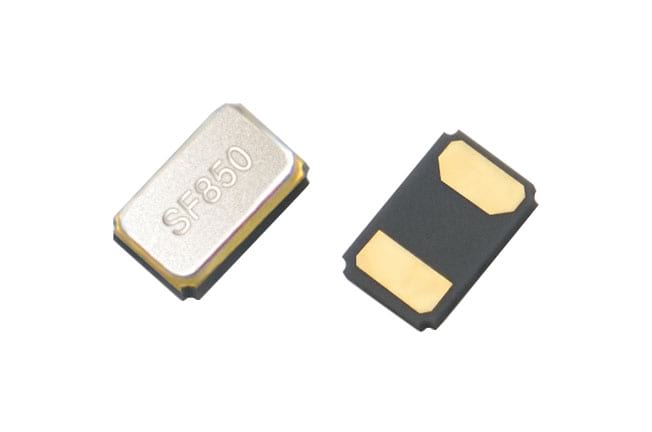
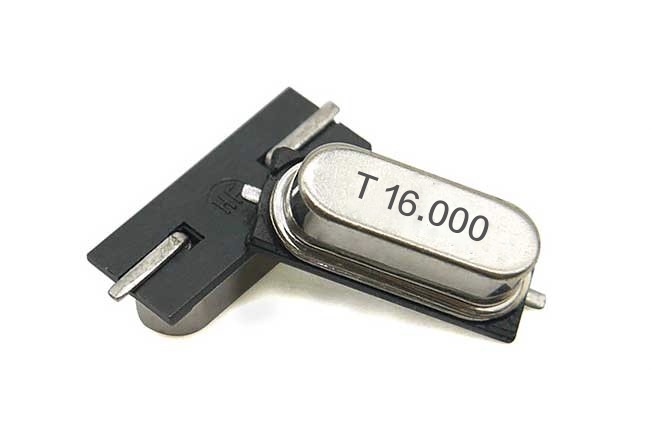
We compare two representative combinations: Surface Mount Crystal Resonator (SMD 3225, 4 pad) vs. Through-Hole Crystal Resonator (HC-49S, DIP). Both are quartz crystal resonators operating in the MHz range (e.g., 8 MHz to 48 MHz). The table below summarizes key differences across four critical dimensions.
| Dimension | SMD Crystal Resonator (e.g., 3225, 5032) | Through-Hole Crystal Resonator (e.g., HC-49S, DT38) |
|---|---|---|
| Technology Parameters |
|
|
| Application Scenarios |
Best for: High-density PCB designs, portable devices, automotive ECUs, 5G routers, smart wearables, IoT sensors, GPS modules. Example: Automotive ADAS camera module requires SMD quartz crystal with AEC-Q200 qualification. |
Best for: Prototyping, legacy designs, industrial control panels, power supplies, high-power RF circuits where PCB space is not critical. Example: Base station power management unit using cylindrical crystal resonator (DT38) for cost-sensitive low-frequency clocks. |
| Cost (per unit at 10k volume) |
$0.08 – $0.25 (varies by size and precision) Note: Higher cost due to ceramic package, seam sealing, and tighter tolerances. |
$0.04 – $0.12 Note: Lower cost due to simpler metal can packaging and manual insertion. |
| Maintenance & Assembly Difficulty |
Automated pick-and-place compatible; reflow soldering (lead-free). No manual adjustment required. If damaged, rework is difficult due to small size. Requires careful PCB layout to avoid parasitic capacitance. |
Often hand-soldered or wave-soldered. Prone to lead bending issues. Easy to replace during prototyping but slower mass assembly. Larger pads allow manual troubleshooting. |
Key Takeaway: For high-volume, space-constrained, and reliability-critical applications (automotive, IoT modules), SMD crystal resonators are the clear winner despite higher unit cost. For low-budget projects or designs with ample board space, through-hole crystal resonators offer simplicity and economy.
2. Supplier Comparison: Chinese Source Factory vs. International Brand
We compare Chinese crystal resonator manufacturers (exemplified by Fronter Electronics Co., Ltd., brand: FT) against well-known international brands such as Epson Toyocom (Japan) and Abracon (USA).
| Dimension | Chinese Factory (e.g., Fronter) | International Brand (Epson/Abracon) |
|---|---|---|
| Price (per 10k pcs) |
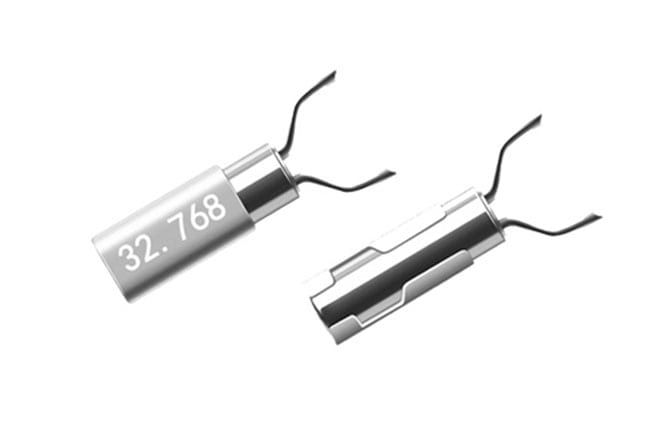
SMD 32.768 kHz tuning fork crystal: $0.06 – $0.10 MHz SMD 3225 (16 MHz): $0.08 – $0.14 Through-hole HC-49S: $0.04 – $0.07 |
SMD 32.768 kHz: $0.15 – $0.30 MHz SMD 3225: $0.20 – $0.45 HC-49S: $0.10 – $0.20 |
| Customization Capability |
High. Fronter offers R&D solutions for custom frequency, load capacitance (CL), and package modification. Quick turnaround for OEM/ODM requests. 2 automated production facilities allow flexible batch sizing. |
Moderate. Standard catalog parts with limited customization. Minimum order quantities (MOQ) higher (5k–10k). Custom frequency lead times 6–12 weeks. |
| Delivery Lead Time |
2–4 weeks for standard products (e.g., HC-49S, SMD 3225). Expedited service available for urgent orders (7–10 days). |
6–12 weeks typical from Japan/USA. Distributor stocks may reduce to 4 weeks but at higher price. |
| After-Sales & Warranty |
Dedicated technical support via email/phone (English). Global shipping from Shenzhen warehouse. Full RoHS/REACH compliance certified (see test reports below). Quick sample replacement for quality issues. |
Established local distributors in major regions (e.g., Digi-Key, Mouser). Warranty handled through distributors; direct support often slower for non-strategic customers. |
Key Takeaway: Chinese factories like Fronter offer 30–60% lower pricing, faster customization, and shorter lead times while maintaining RoHS compliance. International brands provide broader distribution networks and brand recognition but at a premium. For industrial buyers with volume demands, direct sourcing from a qualified Chinese factory significantly reduces total cost of ownership.
3. Decision Model: 3-Step Framework for Crystal Resonator Selection
Use this practical methodology to make an informed choice between SMD vs. through-hole and Chinese vs. international suppliers.
Step 1: Define Use Scenario
Ask: What is the end-product environment?
- Automotive/Aerospace → SMD with AEC-Q200 (high temp, vibration).
- Consumer IoT & Smart Home → SMD for miniaturization (3225, 2012).
- Industrial Control/Low-cost Consumer → Through-hole acceptable.
- Prototyping/Education → Through-hole for easy breadboard use.
Step 2: Match Technical Parameters
Map requirements to crystal resonator specs:
- Frequency stability (ppm) → Application accuracy needs.
- Load capacitance (CL) → Must match circuit design (e.g., 12.5pF, 20pF).
- Temperature range → Choose industrial (-40~+85°C) or automotive (-40~+125°C) grade.
- Package footprint → Ensure aligns with PCB layout (SMD dimensions or DIP pitch).
Step 3: Calculate Total Cost (TCO)
Compare beyond unit price:
- Unit price × volume + shipping + customs duties.
- Customization fee (if needed) → often zero for Chinese factories.
- Lead time cost – faster delivery reduces inventory holding.
- Rejection rate / warranty risk – choose suppliers with RoHS & ISO certificates.
- After-sales support – direct communication vs. distributor markup.
Example TCO comparison for 50k pcs of SMD 3225 16MHz: Fronter unit $0.10 → total $5,000; International brand $0.25 → $12,500. Factoring in lead time (3 weeks vs. 8 weeks) and customization included, Fronter provides 60%+ savings.
4. Case Study: European Industrial IoT Company Chooses Fronter for Custom Crystal Resonator
Background: A German OEM specializing in smart grid monitoring modules needed a quartz crystal resonator with a non-standard frequency (19.2 MHz) and custom load capacitance (8pF) for a new wireless communication module. The required volume was 120,000 pcs per year.
Challenge: The customer initially sourced from a Japanese brand. The quoted price was $0.32/unit with a 10-week lead time. No custom CL was available from standard catalog; they would have to accept a compromise 12pF, degrading power efficiency.
Solution: After evaluating three Chinese suppliers, they selected Fronter Electronics Co., Ltd. (www.chinafronter.com). Fronter’s engineers designed a custom SMD crystal resonator (3225 package) with exact 19.2 MHz frequency, 8pF CL, and ±15 ppm stability. The unit price was $0.11, and first samples were delivered in 10 days. Full production began within 3 weeks.
Result: The customer reduced component cost by 66% and cut time-to-market by 7 weeks. The custom resonator also improved the module’s RF sensitivity by 2 dB due to optimal CL matching. Fronter’s continuous support included providing RoHS and REACH test reports (see examples below) and expedited shipping for urgent replenishments.
Why Fronter Stands Out
- National High-Tech Enterprise (certified 2017) – proven R&D capability.
- 2 automated production facilities with world-class manufacturing & testing machines.
- Full product portfolio: 32.768 kHz tuning fork, MHz SMD, HC-49S, HC-49U, DT38, ceramic resonators, SAW devices.
- Compliance: All products meet RoHS, REACH (test reports available upon request).
- Direct OEM support: R&D solutions, turnkey support, e-commerce, and dedicated English sales team.
- Contact: Tel: +86 755 8345 8798 | WhatsApp: +86 18903022818 | Email: sales@chinafronter.com | www.chinafronter.com
Disclaimer: All product prices and lead times are indicative and subject to market fluctuations as of June 2026. For current quotes, please contact the manufacturer directly.
Have Questions or Need More Details?
Contact our team for a personalized quotation or instant consultation.
Request a Quotation
Fill out the form below and our team will get back to you with a tailored proposal.
WhatsApp Direct Chat
Prefer to chat in real-time? Message us on WhatsApp for instant assistance & quick answers.
- Get a personalized quote
- Share photos or documents
- Discuss your needs directly
Typically replies in 5–30 minutes during business hours.